Kitchen · Buying Guide
Best Food Processor (2026): 8 Picks for Holiday Prep, Chopping and Pie Crust
Chopping onions for stuffing, shredding cheese for casseroles, pulsing pie crust: these 8 food processors cover big-batch 14-cup models, mid-size picks for small kitchens, a blender combo and easy mini choppers.

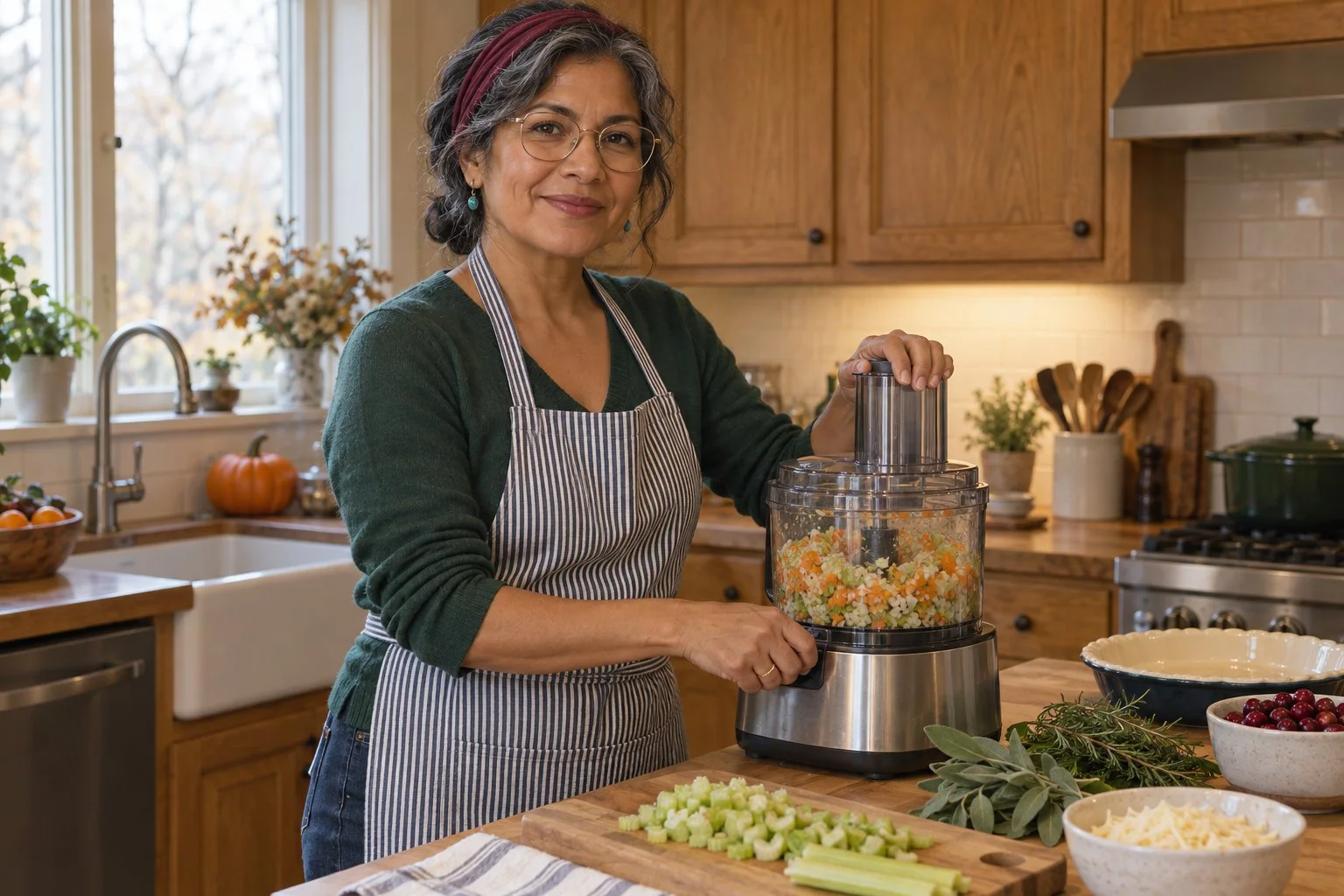
This guide is research-based; products were not tested hands-on.
If your November calendar is filling up with stuffing, soups, pies and a casserole someone always requests, the best food processor can take a lot of the work off your cutting board. It handles the onions, celery and carrots for mirepoix, shreds potatoes and cheese in a few minutes, and pulses cold butter into flour for pie crust that stays tender. The hard part is choosing one, especially if your counter is small or your cabinets are already full. Should you get a full-size machine, a mid-size, a mini chopper or a blender combo? We compared listing details and specs with what food-processor roundups broadly agree on. These are researched recommendations, not hands-on test results.
As an Amazon Associate, ReviewDeal earns from qualifying purchases.
Below you'll find our eight picks, from a 14-cup machine for big holiday batches to a 3-cup chopper that needs no twist-locking. There's a side-by-side comparison table, an honest rundown of each model's strengths and tradeoffs, a buying guide on size, power, discs and cleanup, and answers to common questions such as whether you can put hot soup in a food processor. Every recommendation uses what the Amazon listing actually says, so you know what's included before you buy.

Quick Picks: The Best Food Processor for Every Kitchen
Best overall for holiday and big-batch cooking: Cuisinart 14-Cup Food Processor (DFP-14BCNY). It has a big 14-cup bowl, a heavy, steady base and a simple on and off/pulse layout, so it suits anyone who regularly cooks for a crowd.
Best value with one-touch presets: Ninja Professional Plus Food Processor (BN601). You get a 9-cup bowl, four Auto-iQ presets, a dough blade and a reversible slicing/shredding disc in a lighter package.
Best budget full-size: Hamilton Beach 10-Cup Food Processor with Bowl Scraper (70730). Its 10-cup bowl and built-in scraper mean you stop less often to wipe down the sides.
Best mid-size for smaller kitchens: KitchenAid 7-Cup Food Processor (KFP0718). The blade and disc store inside the bowl, and the bowl assembles with one click instead of a twist.
Best food processor blender combo: Ninja Mega Kitchen System (BL770). One 1500-watt base runs a 72-oz pitcher, an 8-cup processor bowl and two single-serve cups.
Best small food processor that still shreds: Cuisinart 5-Cup Chop & Shred (FP-5). This compact 5-cup model includes a reversible fine/medium shredding disc for cheese and veggies.
Best mini food processor: Cuisinart Mini-Prep Plus 3-Cup (DLC-2ABC). It's a light, easy second tool for garlic, herbs, nuts and dressings.
Best easy-to-use chopper (no twist-lock): Hamilton Beach 3-Cup Stack & Press Chopper (72850). You stack the lid on, press to chop and release to stop.
Food Processors Compared
Model | Capacity & power (as listed) | Standout feature | Best for | Shop |
|---|---|---|---|---|
Cuisinart 14-Cup (DFP-14BCNY) | 14 cups; 720 watts | Extra-large feed tube; heavy, stable base (about 18 lb) | Holiday hosting, big families, batch cooking | |
Ninja Professional Plus (BN601) | 9 cups; 1000 peak watts | 4 Auto-iQ presets; dough blade included | Most households that want versatility | |
Hamilton Beach 10-Cup (70730) | 10 cups; 450 watts | Built-in bowl scraper | Everyday chopping and shredding on a budget | |
KitchenAid 7-Cup (KFP0718) | 7 cups; 300 watts | In-bowl blade storage; one-click, twist-free assembly | Smaller kitchens, couples, simple cleanup | |
Ninja Mega Kitchen System (BL770) | 8-cup processor bowl + 72-oz pitcher (64-oz max liquid); 1500 watts | Blender, processor and single-serve cups on one base | Smoothie makers who also chop and make dough | |
Cuisinart Chop & Shred (FP-5) | 5 cups; ~300-watt class | Reversible fine/medium shredding disc in a compact body | Small households that shred often | |
Cuisinart Mini-Prep Plus (DLC-2ABC) | 3 cups (24-oz bowl); 250 watts | Reversible blade with chop and grind modes | Garlic, herbs, nuts, dressings; second tool | |
Hamilton Beach Stack & Press (72850) | 3 cups; 350 watts | Press-to-chop lid, no twist-locking | Quick chopping with minimal fuss |
Our 8 Food Processor Picks, Reviewed
1. Cuisinart 14-Cup Food Processor (DFP-14BCNY): Best Overall for Holiday and Big-Batch Cooking
Picture a counter covered in onions, celery and carrots for two pans of stuffing, plus potatoes to shred for a breakfast casserole. That's the job this machine is built for. The 14-cup bowl is the largest in our lineup. The controls are just "on" and "off/pulse," with no menus or presets to learn. Food-processor roundups often single out this style of large, heavy Cuisinart as a long-term workhorse. A heavier base stays put when you're working through dense dough or a big batch of hummus, and at about 18 pounds, this one has plenty of weight.
The listing describes an extra-large feed tube with a bowl sleeve assembly that fits both a small and a large pusher. In practice, that means less pre-cutting for whole potatoes or blocks of cheese, and a narrower channel when you want neat slices of something slim, like a carrot. At the time of writing, it averaged about 4.4 stars from roughly 15,300 ratings.
Best for: Anyone who hosts holidays, cooks for a big household or makes soups and sauces in large batches, and has a permanent spot on the counter for it.
Key features
14-cup work bowl and 720-watt motor, per the listing
Simple "on" and "off/pulse" buttons
Extra-large feed tube with bowl sleeve assembly for small and large pushers
Includes a stainless steel standard slicing disc (4mm), a medium shredding disc and a stainless steel chopping/mixing blade
Detachable disc stem and dishwasher-safe parts, per the listing
Limited 3-year warranty on the entire unit and full 5-year warranty on the motor
About 18 lb; about 11"D x 7.9"W x 14.8"H
The brand pitches it for dips, purees, soups, sauces, hummus, salsa and kneading dough
Pros
The largest capacity here, so holiday-size batches need fewer rounds
The heavy base adds stability for doughs and thick mixtures
Very simple controls with almost no learning curve
The large feed tube cuts down on pre-chopping
The longest listed motor warranty in this roundup
Cons
A splurge compared with every other pick here
Heavy enough that hauling it out of a low cabinet gets old fast
Only one slicing thickness and one shredding size out of the box, and the brand notes the blades aren't adjustable
No multiple speeds, so you control texture with the pulse button
A big bowl can be overkill for a handful of herbs or a single clove of garlic
Who should skip it: Anyone with very limited counter space, anyone who would have to lift it in and out of storage regularly, and small households that mostly chop small amounts. A mid-size or mini model will serve those kitchens better.
2. Ninja Professional Plus Food Processor (BN601): Best Value with One-Touch Presets
The Ninja covers a lot of ground. You get a 9-cup bowl, a dough blade, a chopping blade and a reversible slicing and shredding disc. On top of that, the listing describes four Auto-iQ preset programs for chopping, slicing, pureeing and dough making, plus three speeds. If you like pressing one button and walking over to stir the gravy, the presets are a real convenience. At about 7.7 pounds, it's also much easier to lift than the 14-cup Cuisinart.
Nine cups is the right size for most households. It's large enough for a double batch of salsa or a pile of shredded zucchini, and smaller than a 14-cup machine on the counter. It has a strong rating profile, at about 4.5 stars from roughly 14,400 ratings at the time of writing.
Best for: Busy cooks who want slicing, shredding, chopping and dough in one machine at a budget to mid-range price, and who like one-touch programs.
Key features
1000-peak-watt motor, per the listing
4 Auto-iQ presets: chop, slice, puree and dough
3 speeds listed
9-cup processor bowl with feed chute lid and pusher
Includes chopping blade, dough blade and reversible slicing & shredding disc
Removable parts are BPA-free and dishwasher safe, per the listing
About 7.7 lb; about 7.76"D x 9.88"W x 16.02"H
Pros
A dedicated dough blade is included, which is useful for pie crust and pizza dough
Presets take some of the guesswork out of common jobs
The slicing/shredding disc makes it a true food processor, not just a chopper
Light enough to move in and out of a cabinet
Strong value for the number of included pieces
Cons
A plastic body and lighter base than the heavy Cuisinart, which is normal for this tier but means less heft on tough jobs
Some cooks prefer manual control over texture to preset programs
9 cups means very large holiday batches may need two rounds
At about 16 inches tall, it may not fit under some upper cabinets, so measure first
Who should skip it: Anyone who regularly cooks for a crowd and wants the biggest bowl and heaviest base, and anyone who just wants a couple of plain buttons without programs.
3. Hamilton Beach 10-Cup Food Processor with Bowl Scraper (70730): Best Budget Full-Size
If you want a full-size bowl without a splurge price, this Hamilton Beach is the practical choice. Its standout feature solves a small annoyance. The built-in bowl scraper moves side to side, whether the machine is running or off, without removing the lid. That means fewer pauses to unlock everything and scrape down hummus, pesto or cranberry relish with a spatula.
The listing covers five processing functions (slice, shred, chop, mix and puree) using a stainless steel reversible slicing/shredding disc and an S-blade. You also get two speeds plus pulse. If you want the best food processor for chopping vegetables, shredding cheese and blending dips on a budget, this one has the essentials. It also has the second-largest rating pool here, at about 4.4 stars from roughly 41,500 ratings at the time of writing.
Best for: Budget-conscious cooks who want a full-size bowl for everyday chopping, slicing, shredding and dips.
Key features
10-cup bowl with large feed chute
Built-in bowl scraper, usable while running or off, per the listing
450-watt motor; 2 speeds plus pulse
Stainless steel reversible slicing/shredding disc and chopping/pureeing S-blade
Dishwasher-safe blades, bowl and lid; BPA-free in all food zones
About 6.2 lb; about 8.5"D x 10"W x 16"H
Pros
Budget-friendly for a 10-cup capacity
The bowl scraper reduces stop-and-scrape interruptions
Slices and shreds, not just chops
Light and easy to store
Dishwasher-safe main parts
Cons
Lower wattage than the premium models. It's fine for everyday tasks but not built for heavy loads.
No dough blade is listed, so heavy doughs aren't its focus
The lighter base may shift more during tough jobs
Mostly plastic build
Who should skip it: Bakers who want to make bread or pizza dough regularly, and anyone who wants a heavier machine that stays put on dense mixtures.
4. KitchenAid 7-Cup Food Processor (KFP0718): Best Mid-Size for Smaller Kitchens
Fiddly bowls and lost blades are a big reason food processors end up in the back of the cabinet. This KitchenAid addresses both. The listing describes all-in-one storage, so the multi-purpose blade and the reversible slicing/shredding disc live inside the bowl. The bowl attaches with a twist-free, one-click assembly and a latched lid, which helps if twisting a bowl into place is hard on your hands.
At 7 cups, it's a good middle ground for couples, smaller households or anyone with a tight counter. It has three speeds (High, Low and Pulse) on easy-press paddles with illuminated LED controls, plus cord storage. KitchenAid suggests a quick clean with warm water and a drop or two of dish soap, thanks to the leak-resistant bowl. It averaged about 4.5 stars from roughly 7,900 ratings at the time of writing.
Best for: Smaller kitchens and households that want a real slicer/shredder with easy assembly and tidy storage.
Key features
7-cup work bowl with lid, per the listing
All-in-one storage for blades and discs inside the bowl
Snap-and-go, twist-free, one-click bowl assembly with latched lid
Leak-resistant bowl
Multi-purpose blade and reversible medium slicing/shredding disc
2-in-1 feed tube for different ingredient shapes and sizes
3 speeds (High, Low, Pulse) with easy-press paddles and illuminated LED controls
Cord storage; listed 300 watts
About 6.6 lb; about 7.87"D x 9.65"W x 15.35"H
Pros
One-click assembly means no wrestling with twist-lock bowls
In-bowl storage keeps sharp parts contained and together
Compact enough for small counters
Slices and shreds as well as chops
Simple paddle controls
Cons
7 cups means big holiday batches happen in rounds
Lower listed wattage. It's best for chopping, slicing, shredding and sauces, not heavy bread dough.
Only one disc thickness (medium) is included
Who should skip it: Anyone cooking in big holiday quantities on a regular basis, and anyone who plans to make a lot of dough in a processor.

5. Ninja Mega Kitchen System (BL770): Best Food Processor Blender Combo
If you also make morning smoothies, frozen drinks or blended soups, a combo system means one motor base does both jobs. Per the listing, this Ninja pairs a 1500-watt base with a 72-oz pitcher (64-oz max liquid capacity) and Total Crushing Blades. It also includes an 8-cup food processing bowl with a chopping blade and a dough blade, plus two 16-oz Nutri Ninja cups with to-go lids. The brand says the dough blade can mix up to 2 pounds of dough in about 30 seconds.
The important caveat is that no slicing or shredding disc is listed for this model. The processor bowl chops, purees and mixes dough, but it won't slice potatoes for a gratin or shred cheese with a disc the way a dedicated processor does. If you make smoothies often, this combo can save you buying two appliances. If shredding is your main need, look at the Ninja BN601 or the Hamilton Beach 10-cup instead. It had the largest rating pool in our lineup, at about 4.7 stars from roughly 43,300 ratings at the time of writing.
Best for: Households that blend smoothies or frozen drinks regularly and also want chopping, pureeing and dough from the same base.
Key features
1500-watt motor base, per the listing
72-oz pitcher (64-oz max liquid capacity) with Total Crushing Blades
8-cup food processing bowl with chopping blade and dough blade
Two 16-oz Nutri Ninja cups with to-go lids
4 functions (Blend, Mix, Crush, Single-Serve); 5 speeds listed
BPA-free plastic containers
About 9.2 lb; about 15.75"D x 11.1"W x 18.07"H
Pros
Blender, processor and single-serve cups share one base
Highest listed wattage in this roundup
A dough blade is included
Can replace two separate appliances
Cons
No slicing or shredding disc listed, so it's a chop/puree/dough bowl plus blender rather than a slicer/shredder
The tallest pick here at about 18 inches, and the multiple containers take up cabinet space
High-wattage blender motors tend to be loud, which is a common tradeoff in this category
The 8-cup processor bowl is smaller than a dedicated full-size processor bowl
Who should skip it: Anyone who mainly wants to slice and shred, and anyone short on storage who doesn't make smoothies.
6. Cuisinart 5-Cup Chop & Shred Food Processor (FP-5): Best Small Food Processor That Still Shreds
Most small machines only chop. The FP-5 is a compact model that also includes a reversible shredding disc, which flips between fine and medium. Fine shreds suit Parmesan or carrots for slaw, and medium works for cheddar on a casserole or zucchini for bread. Cuisinart frames it as a "two jobs" machine (chop and shred), and the design reflects that. The blade and disc nest inside the bowl between uses, and the cord tucks into the back of the base.
The wide-mouth chute takes rough-cut chunks, per the listing. There's a bowl interlock and a blade lock, simple on, off and pulse controls, and a limited 3-year warranty. It's a newer listing with a smaller rating pool, about 4.5 stars from roughly 375 ratings at the time of writing, so there's less long-term data than for the older models here.
Best for: Small households and tight kitchens where shredding cheese or vegetables is a regular task.
Key features
5-cup bowl, per the listing
Universal chopping blade plus reversible fine/medium shredding disc
Blade and disc nest inside the bowl; cord stores in the back of the base
Wide-mouth food chute for rough-cut chunks
Top-rack dishwasher-safe, BPA-free bowl and removable parts
Bowl interlock and blade lock
~300-watt class motor with on, off and pulse
Limited 3-year warranty; about 7.9"D x 5.91"W x 13.31"H
Pros
Shreds in two sizes in a compact footprint
Very tidy storage with parts kept inside the bowl
Narrow, so it fits on small counters
Simple three-button controls
Cons
No slicing disc, since it's designed to chop and shred only
5 cups means smaller batches
Newer model with fewer ratings so far
Who should skip it: Anyone who wants to slice, and anyone cooking regularly for large groups.
7. Cuisinart Mini-Prep Plus 3-Cup Food Processor (DLC-2ABC): Best Mini Food Processor
Even with a full-size processor, a mini is often the one you reach for most. Mincing three cloves of garlic, a bunch of parsley, a handful of pecans or a quick vinaigrette doesn't need a 14-cup bowl. The Mini-Prep Plus weighs about 2.2 pounds and has a handled 24-ounce work bowl. Cuisinart describes a patented reversible stainless steel blade with an auto-reversing SmartPower blade for two modes, chop and grind. The brand notes that grinding beans isn't recommended.
Push-button controls keep it simple. The bowl and lid are dishwasher safe and the motor base wipes clean. It comes with a spatula and an instruction/recipe book, and it's covered by a limited 18-month warranty. It averaged about 4.6 stars from roughly 25,400 ratings at the time of writing.
Best for: Garlic, herbs, nuts, breadcrumbs, dressings and small batches, either as a second tool or as the main tool for light-duty cooks.
Key features
250-watt motor, per the listing
Reversible stainless steel blade with chop and grind modes
24-ounce (3-cup listed) work bowl with handle
Push-button control panel
Dishwasher-safe bowl and lid; motor base wipes clean
Includes spatula and instruction/recipe book; BPA-free
Limited 18-month warranty; about 2.2 lb
Pros
Very light and easy to grab from a drawer or cabinet
Well suited to small jobs that would get lost in a big bowl
Budget-friendly
Easy cleanup
Cons
The 3-cup listed capacity (24-oz bowl) is for small jobs only
No slicing or shredding
Liquids need to stay under the bowl's fill line, which is generally true of minis
The brand advises against grinding beans
Who should skip it: Anyone who needs one machine to handle shredding, slicing or big batches.
8. Hamilton Beach 3-Cup Stack & Press Chopper (72850): Best Easy-to-Use Chopper (No Twist-Lock)
This chopper removes nearly every step that makes small appliances fiddly. You stack the lid on the bowl, press the lid to chop and release to stop. There's no twisting, aligning or locking. If arthritis, a wrist injury or plain impatience makes twist-lock bowls frustrating, that design is a genuine plus. The lid also has an oil dispenser, so you can drizzle oil in while it runs to emulsify dressings, dips and sauces.
Per the listing, it has stainless steel blades for onions, carrots and nuts, a 350-watt motor, and a dishwasher-safe bowl, lid and removable blades. It weighs about 2.1 pounds and is about 8.5 inches tall, so it fits almost anywhere. It ranked #1 in Amazon's Food Processors best sellers at the time of our category check and averaged about 4.6 stars from roughly 37,800 ratings at the time of writing.
Best for: Quick chopping of onions, carrots, nuts and herbs, plus dressings, for anyone who wants the simplest possible operation.
Key features
Patented stack & press design: press the lid to chop, release to stop, with no twist-locking
3-cup capacity, per the listing
Stainless steel blades
Oil dispenser on lid for dressings, dips and sauces
350-watt motor
Dishwasher-safe bowl, lid and removable blades
About 2.1 lb; about 5.2"D x 5.9"W x 8.5"H
Pros
Extremely simple to assemble and use
Pressing the lid works like a pulse button, which helps with even chopping
The oil dispenser makes emulsified dressings easier
Budget-friendly and tiny to store
Cons
Chopper only, with no slicing or shredding
Small batches
You hold the lid down while it works. That's fine for short pulses but less comfortable for longer purees.
Who should skip it: Anyone who wants smooth purees, shredding or slicing, and anyone who would rather not hold a lid down while the motor runs.
How to Choose a Food Processor
Choosing the best food processor for home use comes down to a few questions. How much do you cook at once? What jobs do you actually do? How much space do you have? And will the thing be easy enough that you'll actually use it? Here's how to work through each one.
Size and capacity: match the bowl to your batches
Food-processor roundups broadly group capacity into three tiers:
3–5 cups: Herbs, garlic, nuts, dressings, salsa for two, baby-size batches, and small households. A mini also makes a great second tool alongside a bigger machine.
7–10 cups: The sweet spot for most households. These handle weeknight chopping, a batch of pesto, shredded cheese for a casserole and most pie crusts.
11–14 cups: Holiday hosting, big-batch soups, larger families and entertaining. You'll get through a mountain of shredded potatoes or a double batch of stuffing vegetables in fewer rounds.
A useful rule: think about your biggest regular job, not your biggest one-time job. If you host Thanksgiving once a year but cook for two the rest of the time, a 7- to 10-cup model plus a mini may serve you better than a 14-cup machine that sits idle eleven months a year.
Food processor vs chopper vs blender
Food processor vs chopper: Choppers like the Mini-Prep Plus and the Stack & Press chop, mince and puree small amounts. A true food processor adds slicing and shredding discs and a larger feed tube, so it can turn a block of cheese into shreds or a potato into even slices. If you only mince aromatics, a chopper is plenty. If you shred and slice, you need discs.
Food processor vs blender: A food processor's wide, flat bowl and S-blade work best with thicker mixtures, such as chopping, pastes, hummus, nut butters and doughs. A blender's tall pitcher and vortex suit liquids: smoothies, frozen drinks and silky soups. Combo systems like the Ninja Mega Kitchen System share one motor base, which saves counter space. Their processor bowls are usually smaller than a dedicated full-size processor, though, and the Ninja combo here doesn't list a slicing/shredding disc.
There's also the question of when to skip the machine. For one shallot or a few slices of lemon, a sharp chef's knife is often faster than assembling and washing anything. Keeping your blade in shape with a good knife sharpener makes small jobs quick and safer. Save the processor for volume.
Power and weight
Higher wattage and a heavier base generally help with dough, nut butters and dense mixtures, because the motor works less hard and the machine doesn't creep across the counter. In our lineup, listed power ranges from 250 watts (Mini-Prep Plus) to 1500 watts (Ninja Mega). Wattage isn't the whole story, though. Blade design and bowl shape matter too, and listed figures (such as Ninja's "peak watts") aren't always measured the same way between brands.
Weight cuts both ways. The 14-cup Cuisinart's roughly 18 pounds keeps it steady, but you won't want to lift it from a low cabinet several times a week. If a machine is heavy, plan a permanent counter spot for it. If it has to live in a cabinet, a lighter model (6–8 pounds) is more realistic.
Discs and blades: check what's actually in the box
Slicing and shredding discs are what separate a true food processor from a chopper, so read the "included" list closely:
Slicing and shredding: The Cuisinart 14-cup, Ninja BN601, Hamilton Beach 10-cup and KitchenAid 7-cup all include slicing and shredding (separate or reversible discs).
Shredding only: The Cuisinart FP-5 shreds in two sizes but doesn't slice.
No discs: The Ninja Mega, Mini-Prep Plus and Stack & Press don't list slicing/shredding discs.
Dough blade: The Ninja BN601 and Ninja Mega list a dedicated dough blade.
More accessories can mean more versatility, but they also mean more pieces to store safely. If you know you'll only shred cheese and chop onions, a simpler kit may suit you better.
Ease of use and cleaning
Fewer parts and easy assembly matter more than most spec sheets suggest. If a machine is a hassle to put together, it tends to stay in the cabinet. Look for:
Latching or one-click lids instead of stiff twist-locks (the KitchenAid's twist-free assembly and the Stack & Press's no-lock design stand out)
A large, simple pulse button, which is the control you'll use most
A wide feed tube so you're not pre-cutting everything to fit
Dishwasher-safe bowls, lids and blades (always check the manual for top-rack guidance)
Smooth bowl interiors without lots of crevices where food gets stuck
Storage and counter space
Measure before you buy. Several full-size models here stand around 15–16 inches tall and the Ninja Mega is about 18 inches, which may not fit under upper cabinets. If you're short on space, look for in-bowl blade storage (KitchenAid, Cuisinart FP-5), cord storage, and a mini that tucks into a drawer. Store discs and blades in their case or inside the bowl rather than loose in a drawer, where you could reach in and touch an edge.
Holiday prep uses: where a food processor earns its spot
Here's where a good processor saves real time between now and New Year's:
Stuffing and soup mirepoix: Pulse onions, celery and carrots in short bursts for an even chop instead of mush. A processor is the best food processor for chopping vegetables when it's set up this way, as long as you don't overfill the bowl.
Shredded potatoes: Latkes, hash brown casseroles and rösti go quickly with a shredding disc.
Pie crust: Cold butter and ice water, pulsed briefly, is the classic method.
Breadcrumbs: Pulse stale bread for casseroles, stuffing toppings or meatballs.
Cranberry relish: Fresh cranberries and orange, pulsed to a chunky texture.
Dips for guests: Hummus, spinach-artichoke and herby yogurt dips.
Shredded cheese for casseroles: Freshly shredded cheese for mac and cheese, gratins and enchiladas.
Big-batch soup: Chop the vegetables first. Puree afterward, once the soup has cooled somewhat.
Food Processor FAQ
Is a food processor worth it?
If you regularly chop large amounts of vegetables, shred cheese or potatoes, or make dough, dips and pestos, a food processor can save a lot of time and wrist strain, especially during the holidays. If you mostly cook for one or two and rarely shred, a mini chopper plus a sharp knife may be all you need. The best way to decide is to list the jobs you do every week and see whether a processor covers them.
What size food processor do I need?
Roughly speaking, 3–5 cups suits herbs, garlic, dressings and small households; 7–10 cups suits most households; and 11–14 cups suits holiday hosting, big families and batch cooking. Many cooks find a mid-size or full-size processor paired with a mini covers almost everything.
Food processor vs blender: what's the difference?
A food processor chops, slices, shreds and makes pastes and doughs, so it's built for thicker, chunkier work. A blender is better for smoothies, frozen drinks and silky liquids. If you want both and have limited space, a combo system shares one base, though its processor bowl is usually smaller than a dedicated full-size model's.
Food processor vs chopper: which do I need?
A chopper handles garlic, herbs, nuts, dressings and small batches, but it can't slice or shred. A food processor adds discs and a feed tube for slicing and shredding, plus a larger bowl. If shredded cheese, sliced potatoes or big volumes are on your list, get a processor. If you mostly mince aromatics, a chopper is enough.
Can you make pie crust in a food processor?
Yes, and it's one of the best reasons to own one. The classic method is to pulse cold, cubed butter into the flour until the pieces are pea-size or smaller, then drizzle in ice water while pulsing. Stop as soon as the dough just starts to clump. Overprocessing is what makes crust tough. A model with a dough blade or a heavy base, like the Ninja BN601 or the 14-cup Cuisinart, is a strong contender for the best food processor for pie crust, though most full-size processors can do it. For whipped cream, cookie dough and cake batters, a hand mixer is usually the better tool, because it adds air instead of cutting.
Can you shred cheese in a food processor?
Yes, if your processor has a shredding disc. The Cuisinart 14-cup, Ninja BN601, Hamilton Beach 10-cup, KitchenAid 7-cup and Cuisinart FP-5 all include one. Chill the cheese briefly before shredding so it shreds cleanly instead of smearing, and cut it to fit the feed tube. Choppers without discs will chop cheese into crumbles rather than shreds.
Can a food processor knead dough?
Some can. Look for a dough blade, a strong motor and a heavy, stable base. The Ninja BN601 and Ninja Mega Kitchen System list dough blades, and Cuisinart pitches its 14-cup model for kneading dough. Lighter, lower-wattage models are better kept to chopping, slicing, shredding and sauces. Check your manual for maximum dough amounts.
Can you put hot soup in a food processor?
General guidance is to let soup cool somewhat before processing, work in small batches and never fill past the bowl's max-liquid line. Hot liquid and steam can push up through the lid. Food processor bowls aren't designed for large amounts of liquid, so check your manual for limits. If you make big-batch soups in a Dutch oven, ladle a portion into the processor, puree it, and return it to the pot rather than pouring in the whole pot at once.
How do you clean a food processor safely?
Unplug the base first. Blades are very sharp, so always handle them by the center hub, never the edges. Wash blades right away by hand or according to your manual's dishwasher instructions, and don't leave them loose in soapy water where you can't see them. Wipe the motor base with a damp cloth and never submerge it. Store discs and blades in their case or inside the bowl. While you're cooking, keep your hands out of the feed tube and always use the pusher.
How We Chose These Food Processors
ReviewDeal did not hands-on test these products. These are researched recommendations based on:
Verified listing details: We checked each product's Amazon US listing for capacity, listed wattage, included blades and discs, controls, dimensions, weight and warranty information. All were listed as in stock when checked.
Roundup consensus: We looked for themes that food-processor roundups broadly agree on. Those include matching capacity to batch size, the value of a heavy base for dough, the pulse button as the most-used control, discs as the dividing line between processors and choppers, and simple assembly as a predictor of real-world use.
Type and size coverage: We chose picks across full-size, mid-size, small, mini, chopper and combo categories, so there's a sensible option for big holiday kitchens, small apartments and everything in between.
Honest tradeoffs: Pros and cons come from listed specs and well-known tradeoffs of each processor type, not invented test results.
Ratings as one signal: We noted star averages and rough rating counts at the time of writing as context only. Ratings can be pooled across color or size variations of the same listing, and they change over time.
We don't list prices because they change often, especially around the holidays. Use the "Check price on Amazon" links to see current pricing.
The Bottom Line
If you host holidays or cook in big batches and have a permanent counter spot, the Cuisinart 14-Cup is our top pick for its capacity, stability and simple controls. For the most features per dollar, the Ninja Professional Plus (BN601) includes presets, a dough blade and a slicing/shredding disc. On a tighter budget, the Hamilton Beach 10-Cup covers everyday chopping and shredding with a handy built-in scraper. Small kitchens will appreciate the KitchenAid 7-Cup for its one-click assembly and in-bowl storage, or the Cuisinart FP-5 if shredding matters most.
Smoothie makers should consider the Ninja Mega Kitchen System, as long as they don't need slicing or shredding. Whatever you choose, a mini like the Cuisinart Mini-Prep Plus or the twist-free Hamilton Beach Stack & Press is worth having for garlic, herbs and dressings. The right machine is one that fits your space and your batch sizes, and that's easy enough to use often.
By Kiyomi Dyme
Keep reading.
Best Air Fryer (2026): 8 Picks for Crispy Weeknight Dinners and Holiday Sides
Want crispy dinners without heating the whole kitchen? These 8 air fryers cover families, holiday sides, small kitchens, glass cooking, easy cleanup and cooking for one or two.
Read Guide
Best Hand Mixer (2026): 8 Picks for Holiday Baking, Cookie Dough and Whipped Cream
The best hand mixer for holiday baking: 8 corded and cordless picks for cookie dough, whipped cream and mashed potatoes, from budget to splurge.
Read Guide
Best Dutch Oven (2026): 8 Picks for Soups, Braises and Sourdough Bread
One pot for soups, pot roast, holiday braises and sourdough: 8 Dutch ovens, from a Lodge value pick and budget Overmont to Le Creuset, Staub and a light pick.
Read Guide