Garden · Buying Guide
Best Pruning Shears (2026): 8 Picks for Roses, Shrubs and Smaller Hands
Crushed stems, sticky blades, pruners too big for your hand? These 8 bypass pruning shears cover budget, geared, Japanese, left-handed and smaller-hand picks, plus how to clean and sharpen them.

This guide is research-based; products were not tested hands-on.
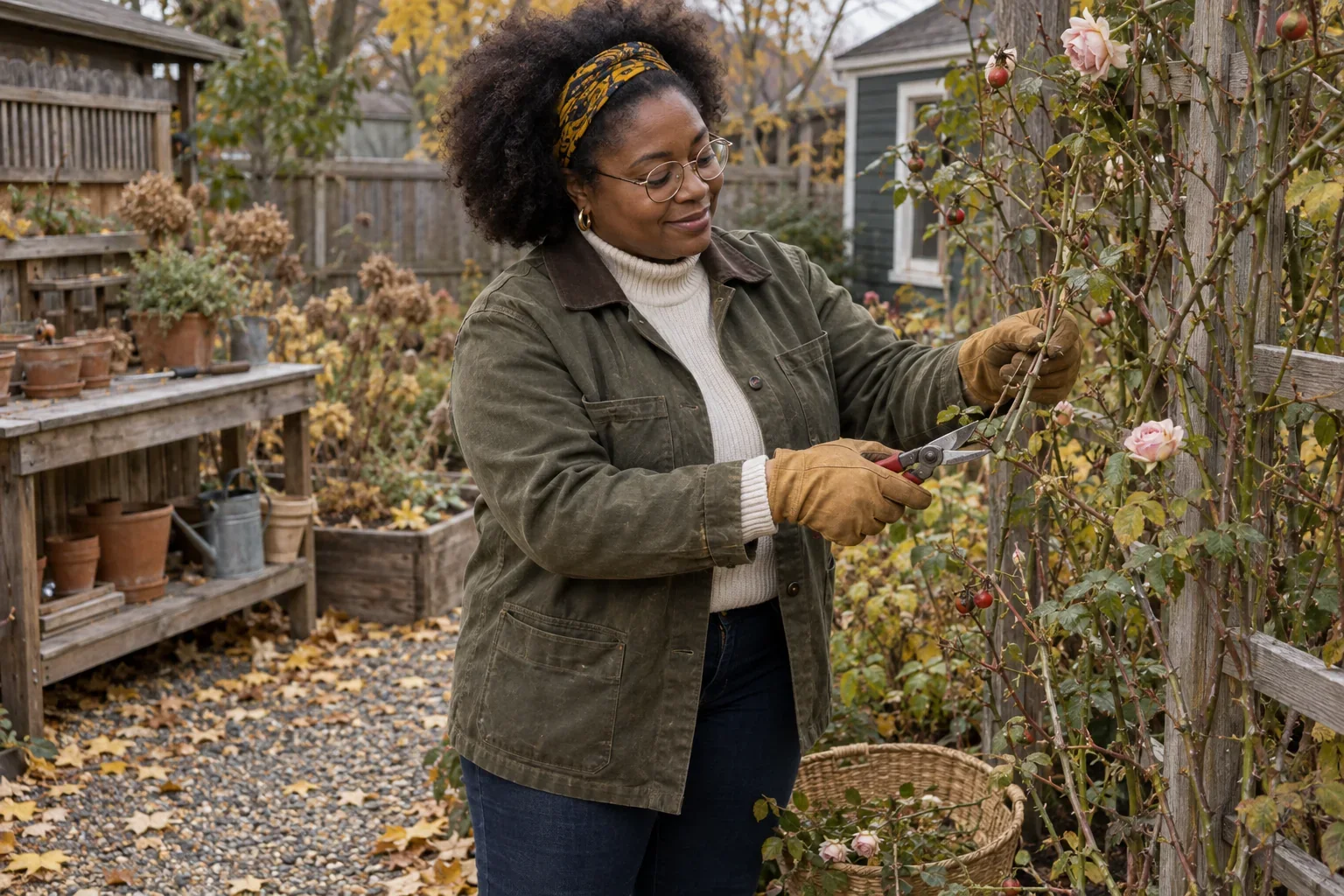
If your old pruners crush stems instead of slicing them, gum up with sap, or have quietly gone dull and rusty in the shed, you are not imagining it: a worn tool makes fall cleanup much harder than it should be. The best pruning shears cut cleanly, fit your hand, and can be cleaned and sharpened so they last for years. That matters right now, as you cut back perennials, tidy the beds for winter, and plan dormant-season trims for roses and shrubs. If "pro" pruners feel too wide for your hand, or your grip tires after a few minutes, fit is the fix. One note up front: these are researched recommendations based on verified listings and manufacturer specs, not hands-on test results.
As an Amazon Associate, ReviewDeal earns from qualifying purchases.
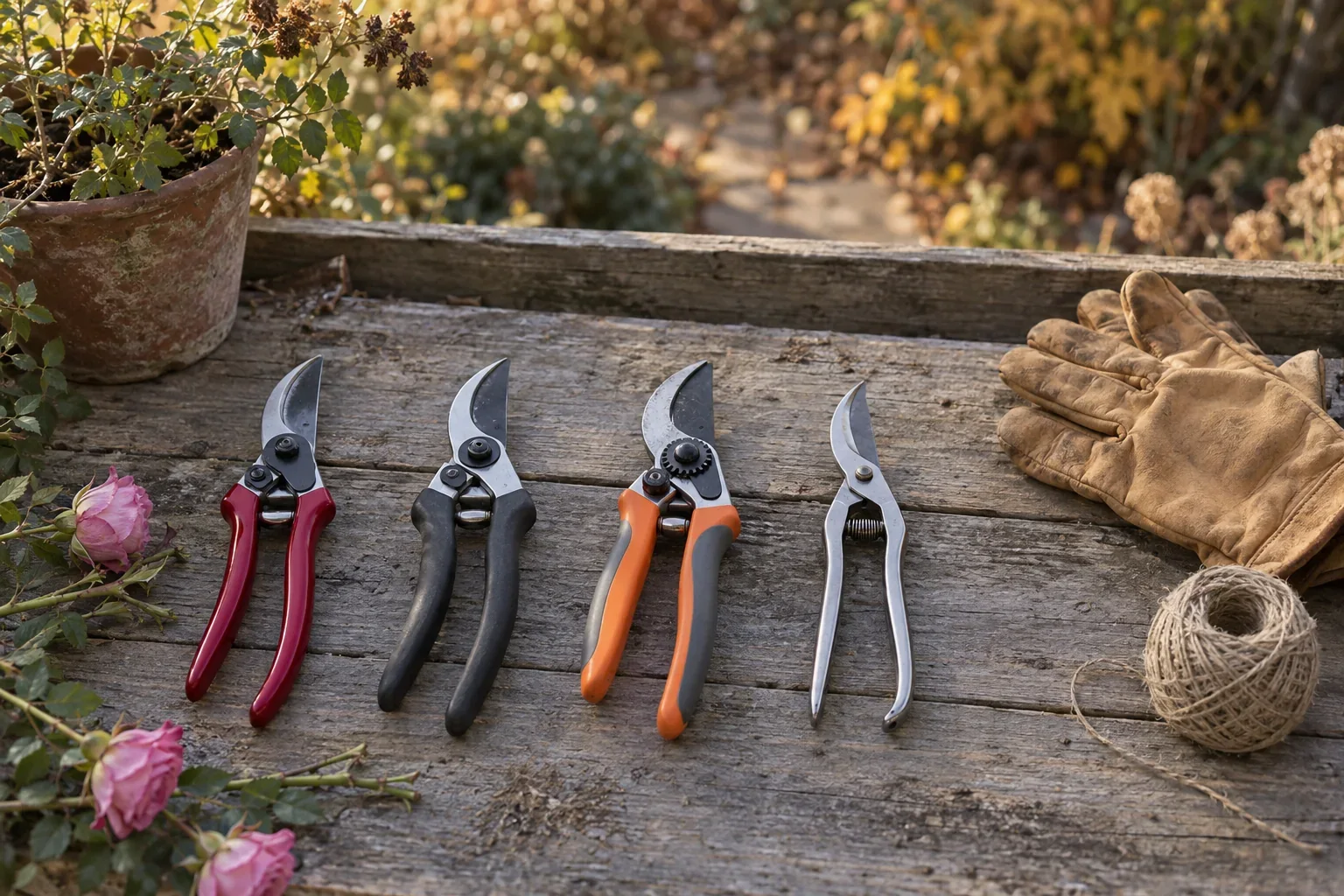
Below you'll find eight bypass pruners for different needs: a best overall pick, one for smaller hands, a budget pick, one for less grip strength, one for thicker branches, a lightweight option for roses and detail work, a Japanese classic, and a true left-handed model. We've also included a hand-size guide so you can measure before you buy, a side-by-side comparison table, a step-by-step guide to cleaning and sharpening, and an FAQ covering the questions gardeners ask most. Several of these also make a thoughtful gift for the gardener on your list.
Quick Picks: The Best Pruning Shears for Every Hand
Best overall: FELCO 2 Classic Pruning Shears — The Swiss-made red-handled classic, with replaceable parts and close to a 1-inch cut capacity, built to be maintained for the long haul.
Best for smaller hands: FELCO 6 Compact Pruning Shears — A shorter, compact FELCO that the brand rates for medium hands, with the same repairable design as the FELCO 2.
Best budget: Fiskars Bypass Pruning Shears (5/8 in) — The most budget-friendly pick here, with a low-friction coating and a lifetime warranty per the listing, ideal for flowers, herbs and light trimming.
Best for less grip strength: Fiskars PowerGear2 Bypass Pruning Shears (3/4 in) — A geared mechanism and rolling handle that Fiskars says multiply leverage and reduce hand fatigue.
Best for thicker branches: Corona ClassicCUT Forged Bypass Pruner BP 3180D — A forged, resharpenable workhorse with a 1-inch cut capacity and replacement parts sold by Corona.
Best lightweight for roses and detail work: ARS HP-VS8Z Signature Heavy Duty Pruner — Narrow, hard-chrome plated blades that ARS says resist rust and sap, in a lightweight 8-inch-class body.
Best Japanese pruner: Okatsune 103 Bypass Pruners — A minimalist, made-in-Japan pruner with very hard Izumo Yasugi steel blades and a one-hand lock.
Best for left-handed gardeners: FELCO 9 Left-Handed Pruning Shears — A true mirror-image FELCO, so left-handers can finally see the cut they're making.
Bypass vs. Anvil Pruners: Which Do You Need?
This is the number one question, and the answer is simple. Bypass pruners work like scissors: a sharp cutting blade slides past a curved lower jaw (the hook). That scissor action makes the clean, precise cut that live, green stems need to heal well, which is why bypass is the default for roses, shrubs, perennials and fruit trees.
Anvil pruners work differently. A straight blade presses down onto a flat surface, like a knife on a cutting board. That's handy for dead, dry wood, but on living stems it can crush the tissue instead of slicing it. If your old pruners leave mashed, ragged ends, an anvil design or a dull bypass blade is usually why.
All eight picks in this guide are bypass pruners. One wording note so it doesn't trip you up: FELCO's product pages describe their models as bypass pruners but also mention an "anvil blade." That's simply FELCO's name for the lower hook, or counter-blade. It does not mean they are anvil-style pruners.
Use bypass for: live roses, shrubs, perennials, herbs, deadheading, and green growth on fruit trees.
Use anvil for: dead, dry, brittle wood where a perfectly clean cut matters less.
Reach for loppers or a pruning saw when: a branch is near or beyond your pruner's listed maximum cut, or you find yourself straining or twisting to get through it.
Find Your Fit: Pruner Size and Hand Size
Fit matters more than brand. A pruner that's too big for your hand forces your fingers to stretch wide on every squeeze, and that's when grip fatigue sets in fast. FELCO publishes a simple hand-size guide: measure from the base of your palm to the tip of your middle finger. Grab a ruler, then match your number below.
Hand length (base of palm to middle fingertip) | Size (FELCO's guide) | Picks that are rated or described for it |
|---|---|---|
Under 6 7/8 in | Small | None of our eight are small-hand models (FELCO and others make small-hand pruners; if you are here, compare lengths carefully) |
6 7/8 to 7 7/8 in | Medium | FELCO 6 (FELCO: medium), ARS HP-VS8Z (ARS: average/medium hands), Okatsune 103 (Okatsune: medium hands), Corona BP 3180D (Corona: medium to large) |
Over 7 7/8 in | Large | FELCO 2, FELCO 9 (FELCO: large), Corona BP 3180D |
Not rated by hand size | — | Fiskars Bypass, Fiskars PowerGear2 (no hand-size rating published on the listing) |
Keep in mind these are the brands' own size ratings, not a universal standard. Overall length and how wide the handles open both matter too. Many "standard" professional pruners are around 8 inches long, so if your hand is on the smaller side, compare lengths in the table below and favor shorter, narrower designs.
How We Chose
ReviewDeal did not hands-on test these pruners. Instead, we built this list from research. We checked verified Amazon listings and current availability on November 20, 2026, when all eight showed In Stock. Where brands publish detailed specs (FELCO, Corona, ARS and Okatsune), we cross-checked their manufacturer pages and flagged any places where the listing and the brand disagree.
We limited the list to bypass designs, then compared listed cut capacity, hand-size fit, blade steel and coatings, replaceable parts and warranties, and left-handed availability. We also aimed for a spread from budget-friendly to premium, and weighed the trade-offs that garden-tool guides broadly agree on: sharp, well-fitted bypass blades for living plants, the right size for your hand, and a tool you can keep clean and sharp.
Pruning Shears Compared
Pruner | Max cut (as listed) | Length (as listed) | Hand size / orientation | Blade / mechanism | Best for | Shop |
|---|---|---|---|---|---|---|
FELCO 2 | 0.98 in (FELCO) | 8.46 in (FELCO) | Large / right-handed | Hardened steel bypass; forged aluminum handles | Best overall | |
FELCO 6 | 0.79 in (FELCO) | 7.68 in (FELCO) | Medium / right-handed | Hardened steel bypass; angled head | Smaller hands | |
Fiskars Bypass | 5/8 in | Not listed | Not rated | Coated steel bypass | Budget, flowers and herbs | |
Fiskars PowerGear2 | 3/4 in | Not listed | Not rated | Geared bypass; rolling handle | Less grip strength | |
Corona BP 3180D | 1 in | Not listed | Medium to large (Corona) | Forged steel bypass, resharpenable | Thicker branches | |
ARS HP-VS8Z | About 0.9 in (22 mm, ARS VS-8XZ) | About 7.9 in (200 mm) | Medium/average | Hard-chrome high-carbon steel bypass | Roses, detail work | |
Okatsune 103 | About 1 in (25 mm, Okatsune) | About 7.9 in (200 mm) | Medium | Izumo Yasugi steel bypass | Japanese classic | |
FELCO 9 | 0.98 in (FELCO) | 8.27 in (FELCO) | Large / left-handed | Hardened steel bypass | Left-handers |
Our 8 Pruning Shear Picks, Reviewed
1. FELCO 2 Classic Pruning Shears: Best Overall
Best for: Gardeners with larger hands who want one serious pruner they can maintain, repair and keep for years.
If you've ever borrowed a pruner from a nursery pro, there's a good chance it had red handles. The FELCO 2 is the classic, and FELCO says it has made the model since 1945. What sets it apart isn't flash; it's that nearly everything on it can be adjusted, sharpened or replaced. When the blade eventually wears, you replace the blade, not the whole tool.
The catch is fit. FELCO rates the FELCO 2 for large hands, and it's right-handed only. If your hand measures in the medium range, or the handles feel like a stretch, skip ahead to the FELCO 6. One more note: the Amazon title lists the length as 9.25 inches and the Amazon warranty field says one year, while FELCO's own page lists 8.46 inches and a lifetime warranty. We've used FELCO's figures.
Key features:
One-hand bypass pruning shear, made in Switzerland (FELCO)
Hardened steel cutting blade and forged aluminum handles
Riveted "anvil blade," which is FELCO's term for the lower counter-blade, not an anvil-style design
Adjustable cutting head and cushioned shock absorbers
Cutting diameter 0.98 in; length 8.46 in; net weight 0.55 lb; blade length 2.17 in (FELCO)
Replaceable components, with genuine spare parts sold
Non-slip coating and angled head said to reduce hand and wrist strain (per the listing)
Lifetime warranty per FELCO's page
Pros
Nearly 1-inch cut capacity handles most shrub and rose work
Replaceable and sharpenable parts make it a long-term tool, not a disposable one
Adjustable head lets you fine-tune the cut as parts wear
A classic, giftable choice for a dedicated gardener
Cons
Premium price, the highest tier on this list
Sized for large hands; may feel wide if your hands are smaller
Right-handed only
Who should skip it: Anyone with small or medium hands, left-handers (see the FELCO 9), or anyone who only snips herbs and flowers a few times a season.
2. FELCO 6 Compact Pruning Shears: Best for Smaller Hands
Best for: Right-handed gardeners with medium-sized hands who want FELCO quality in a more compact body.
This is the answer for many of us searching for the best hand pruners for women, simply because so many standard pruners are built around larger hands. The FELCO 6 is shorter than the FELCO 2 (7.68 inches versus 8.46 inches per FELCO), with a smaller blade and a narrow, pointed lower blade that the listing says is suited to twiggy branches and close cuts. FELCO says its angled cutting head aligns with your hand and wrist to reduce strain.
Honest caveat: FELCO rates the FELCO 6 for medium hands, not small. If your hand measures under 6 7/8 inches, it's worth comparing FELCO's dedicated small-hand models too. And while one Amazon bullet mentions a rotating handle, FELCO's own page doesn't list one for this model, so don't count on it. The Amazon warranty field also says one year, while FELCO's page says lifetime.
Key features:
Compact bypass pruning shear for medium hands, made in Switzerland (FELCO)
Precision-ground hardened steel blade and forged aluminum handles
Angled cutting head, cushioned shock absorbers and adjustable cutting head
Cutting diameter 0.79 in; length 7.68 in; net weight 0.48 lb; blade length 1.65 in (FELCO)
Wire-cutting notch and sap groove to minimize sticking (per the listing)
Replaceable components, including replacement blades
Lifetime warranty per FELCO's page
Pros
Shorter and lighter than the FELCO 2, per FELCO's specs
Narrow tip gets into tight spots on roses and dense shrubs
Same repairable, long-life design as other FELCO models
Cons
Smaller cut capacity than the FELCO 2 (0.79 vs. 0.98 in)
Rated medium, so truly small hands may still want something smaller
Premium price and right-handed only
Who should skip it: Left-handers, anyone with large hands who regularly cuts thicker branches, or shoppers looking for a budget pick.
3. Fiskars Bypass Pruning Shears (5/8 in): Best Budget
Best for: Light, everyday snipping of flowers, perennials and herbs on a budget.
Not everyone needs a heirloom pruner. If most of your cutting is deadheading, harvesting herbs or trimming soft perennial stems, this Fiskars is a practical, budget-friendly bypass pruner. The listing says its low-friction blade coating helps reduce friction, sap buildup and rust, which addresses the sticky-blade problem directly. It's also an easy stocking stuffer.
Know its limits, though. At 5/8 inch, it has the smallest cut capacity on this list, so it isn't the tool for woody shrub branches. It's a nice partner for tidying up a raised garden bed at the end of the season, snipping spent tomato vines and woody herb stems.
Key features:
Bypass blade for live stems and green growth; cuts up to 5/8 in diameter (listing, model 91095935J)
Precision-ground steel blades said to stay sharp (per Fiskars)
All-steel construction
Low-friction coating said to reduce sap gumming and rust (per Fiskars)
Sap groove, ergonomic non-slip handle and easy-open safety lock
Lifetime Warranty (listing)
Pros
The most budget-friendly pick here
Coating and sap groove target sticky buildup
Lifetime warranty per the listing
Easy gift or backup pair
Cons
Smallest cut capacity in this roundup
No hand-size rating published on the listing
No replaceable-blade system mentioned
Who should skip it: Anyone pruning established shrubs, roses with thick canes, or fruit trees regularly.
4. Fiskars PowerGear2 Bypass Pruning Shears (3/4 in): Best for Less Grip Strength
Best for: Gardeners whose grip tires quickly and who want each squeeze to take less effort.
If your hand starts aching halfway through cutting back the garden, the mechanism can make a real difference. Fiskars says its patented PowerGear2 technology multiplies leverage, using modified gears to maximize cutting power through the middle of the branch, which is the toughest part of the cut. The contoured rolling handle, per the brand, moves with your hand to reduce hand fatigue. People with less hand strength often prefer geared designs like this.
The trade-off is bulk: a geared head is chunkier than a simple pruner, which can make tight spots in a dense rosebush trickier. It's still a capable middle-ground option, cutting branches up to 3/4 inch per the listing.
Key features:
Bypass pruner that cuts branches up to 3/4 in thick (listing)
PowerGear2 technology that Fiskars says multiplies leverage
Fully hardened bypass-style steel blades (listing)
Contoured rolling handle that Fiskars says reduces hand fatigue
Fits most pruner holsters
Lifetime Warranty (listing)
Pros
Designed for less effort per squeeze, per Fiskars
Rolling handle is an unusual comfort feature at this price
More cut capacity than the basic Fiskars
Cons
Geared head is bulkier for precise or tight cuts
No hand-size rating published on the listing
The listing does not mention replacement blades
Who should skip it: Anyone who prefers a slim, simple tool for precision rose work, or who wants a pruner built around replaceable parts.
5. Corona ClassicCUT Forged Bypass Pruner BP 3180D: Best for Thicker Branches
Best for: Shrub and woody-stem work where you regularly cut close to an inch.
The Corona BP 3180D is a long-time workhorse that offers a 1-inch cut capacity at a budget-friendly-to-mid-range price. Corona says its MAXFORGED blade comes from the forging process behind its strongest tools and stays sharper longer, and the slant-ground, narrow-profile hook is hand-matched with the blade for clean, close cuts on green or dry branches. Better still, the blade is resharpenable, and Corona sells a replacement blade, spring, pivot bolt and nut, and clip.
It's on the sturdier, heavier side, and Corona says the grip is best suited for medium- to large-sized hands. If your hands are small, it may feel wide.
Key features:
ClassicCUT bypass pruner with 1 in cut capacity (Corona)
Resharpenable MAXFORGED steel blade with slant-ground, narrow-profile hook
Self-cleaning sap groove
Non-slip grip best suited for medium to large hands (Corona)
Built-in safety lock and contoured red handles (listing)
Replacement blade, spring, pivot bolt/nut and clip sold by Corona
Lifetime warranty against material and workmanship defects (Corona)
Pros
Full 1-inch cut capacity at a friendlier price than premium picks
Resharpenable blade and available replacement parts
Sturdy forged build
Cons
Grip suits medium to large hands; can feel wide in small hands
Heavier, sturdier feel than lightweight picks
Who should skip it: Gardeners with small hands or anyone doing mostly delicate deadheading and herb snipping.
6. ARS HP-VS8Z Signature Heavy Duty Pruner: Best Lightweight for Roses and Detail Work
Best for: Rose lovers and detail-minded gardeners with average-size hands who want precise, narrow blades.
If you're hunting for the best pruning shears for roses, narrow, pointed blades matter, because they let you reach in and cut just above a bud without wrestling the whole bush. The ARS is built for exactly that. ARS describes its 8-inch VS-8 family as for medium-sized hands and calls it ultra-lightweight; its blades are high-carbon steel with hard-chrome plating that ARS says resists rust and sap buildup and keeps the edge sharp longer.
Model naming can be confusing: the same 8-inch VS-8 family is sold under slightly different codes, including HP-VS8Z on the Amazon title, ARS-VS-8XZ in the Amazon model field, and VS-8XZ or HP-VS8XZ elsewhere. Specs below come from ARS's page for the VS-8XZ. A US nursery-supply retailer also lists die-cast aluminum handles, replaceable blades, and a lock that opens when you squeeze the handles.
Key features:
Hard-chrome plated blades for rust and sap protection (listing)
High-carbon steel, per ARS
About 7.9 in (200 mm) long; 54 mm blade; maximum cut about 0.9 in (22 mm), per ARS's VS-8XZ page
"8 in for average size hands" (listing)
Non-slip coated ergonomic handles and high-quality spring (listing)
Lifetime warranty against manufacturer defects (listing)
Pros
Narrow, pointed blades suit roses and close cuts
Lightweight design, per ARS
Hard-chrome plating targets sap and rust
Sized for medium/average hands
Cons
Less heavy-duty than 1-inch-capacity picks on thick wood
Model codes vary by market, which can make shopping for parts confusing
Who should skip it: Anyone who mainly cuts thicker, woody branches or wants a geared mechanism to reduce effort.
7. Okatsune 103 Bypass Pruners: Best Japanese Pruner
Best for: Gardeners with medium hands who appreciate simple, beautifully made tools and don't mind a little upkeep.
Okatsune calls the 103 its most popular pruner, and its appeal is in the steel. Okatsune says the blades are forged from Izumo Yasugi steel with a stated Rockwell hardness of 60–61, so they stay sharp a long time. The blade is ground at two angles with a hollow-ground shape that the brand says lets sap flow away, and Okatsune says it's easy to sharpen on a whetstone. Per Okatsune, it handles cuts up to about 1 inch.
The design is minimalist: vinyl-coated handles for grip, a V-shaped spring and a one-hand lock, with no cushioning or rolling handle. Very hard steel also asks for consistent care, so plan to keep it dry and oiled.
Key features:
Made in Japan, for medium-sized hands (Okatsune)
Total length about 7.9 in (200 mm); blade length 55 mm; maximum cut about 1 in (25 mm)
About 8 oz (Okatsune lists 227 g; the Amazon listing says about 8.1 oz / 230 g)
Izumo Yasugi steel blades, Rockwell 60–61 per Okatsune
Hollow-ground, two-angle blade; V-shaped spring; one-hand locking system
Vinyl-coated non-slip handle (listing)
Pros
Very hard steel the brand says holds an edge a long time
About 1-inch cut capacity in a medium-hand size
Clean, classic design that makes a lovely gift
Cons
No cushioning or comfort mechanism
Needs to be kept dry and oiled
No replacement-part system mentioned on the sources we checked
Who should skip it: Anyone who wants a padded, geared or rolling handle, or who knows they'll leave tools out in the rain.
8. FELCO 9 Left-Handed Pruning Shears: Best for Left-Handed Gardeners
Best for: Left-handers, especially those with larger hands, who are done fighting right-handed tools.
Using a right-handed pruner in your left hand means the blade sits on the wrong side, so you can't see exactly where you're cutting. The FELCO 9 mirrors the design so the blade is where you need it. FELCO says it's designed for left-handers, especially those with larger hands, and it shares the FELCO 2's nearly 1-inch cut capacity.
Two clarifications: one Amazon bullet mentions a rotating handle, but FELCO's page doesn't describe the FELCO 9 that way, so don't expect one. And the Amazon warranty field says one year, while FELCO's page says lifetime.
Key features:
One-hand bypass pruning shear for left-handers, made in Switzerland (FELCO)
Cutting diameter 0.98 in; length 8.27 in; net weight 0.55 lb; blade length 2.05 in (FELCO)
Forged aluminum handles and hardened steel blades (listing)
Shock absorbers, cushion stop, wire-cutting notch and sap groove (listing)
Screw-mounted anvil blade (FELCO's lower counter-blade) and fine blade adjustment
Lifetime warranty per FELCO's page
Pros
A true left-handed design, not just "ambidextrous"
Nearly 1-inch cut capacity
Adjustable and built to be maintained long-term
Cons
Sized for larger hands
Premium price
Left-handed only, so it's not one to share with right-handed helpers
Who should skip it: Right-handers, and left-handers with small or medium hands who may find it too large.
Pruning Shears Buying Guide: What Actually Matters
Bypass for living plants
For roses, shrubs, perennials and fruit trees, bypass is the default because it slices rather than crushes. That's why every pick here, and why the best bypass pruners tend to be the first tool experienced gardeners recommend. Keep an anvil pruner, if you have one, for dead wood only.
Cutting capacity (and when to grab loppers)
Hand pruners are for stems and small branches. Brands list a maximum cut diameter; the picks here range from 5/8 inch to about 1 inch. Cutting right at the top of that range is hard on both your hand and the blade, so it's smart to stay comfortably below the max. For anything thicker, reach for loppers or a pruning saw, and never twist the pruner side to side to force a cut, which can bend or nick the blade.
Hand size and handle spread
Measure your hand from the base of the palm to the tip of the middle finger and compare it with each brand's rating (see our table above). Then look at overall length: many pro-style pruners are around 8 inches. If the handles open wider than your hand comfortably spans, you'll feel it after a few dozen cuts.
Less grip strength? Geared and lightweight designs
Geared or ratcheting mechanisms, like Fiskars PowerGear2, are designed to multiply leverage so each squeeze takes less effort, per the brand. Lighter tools and rolling or rotating handles can also help reduce fatigue, according to the brands that make them. People with less hand strength may prefer these designs. Don't overlook the basics, either: a sharp, clean, well-adjusted blade often matters as much as the mechanism.
For thorny work like roses, barberry or holly, a good pair of garden gloves protects your hands and gives you a steadier grip on the tool.
Blade steel, coatings and rust
High-carbon steel takes a very sharp edge and can be resharpened, but it needs wiping and oiling to prevent rust. Hard-chrome plating (ARS) and low-friction or non-stick coatings (Fiskars) are meant to help with sap and rust, per the brands. Whatever the steel, put it away clean and dry.
Left-handed options
Most pruners are right-handed, and some claim to be ambidextrous. A true left-handed model, like the FELCO 9, mirrors the blade so you can see your cut. If you're a lefty, that visibility is worth seeking out.
Replaceable parts, sharpening and warranty
Premium brands like FELCO, ARS and Corona sell replacement blades and springs, which is why their pruners can stay in service for decades with care. Check warranties carefully: in this list, a couple of Amazon listings show a shorter warranty than the manufacturer's own page, so confirm on the brand's terms before you rely on it.
Safety lock and holster
A lock you can work with one hand keeps blades closed when you're not cutting and protects the edge in your pocket or bucket. A holster keeps pruners at your hip and out of the grass; the Fiskars PowerGear2 listing says it fits most pruner holsters. If you're building out a small kit with loppers, a trowel and a hand rake, our guide to garden tools is a good next stop.
A quick word on electric pruners
Cordless electric pruners exist for heavy-volume pruning, such as orchards or vineyards, but they're beyond the scope of this guide to hand tools.
How to Clean and Sharpen Pruning Shears
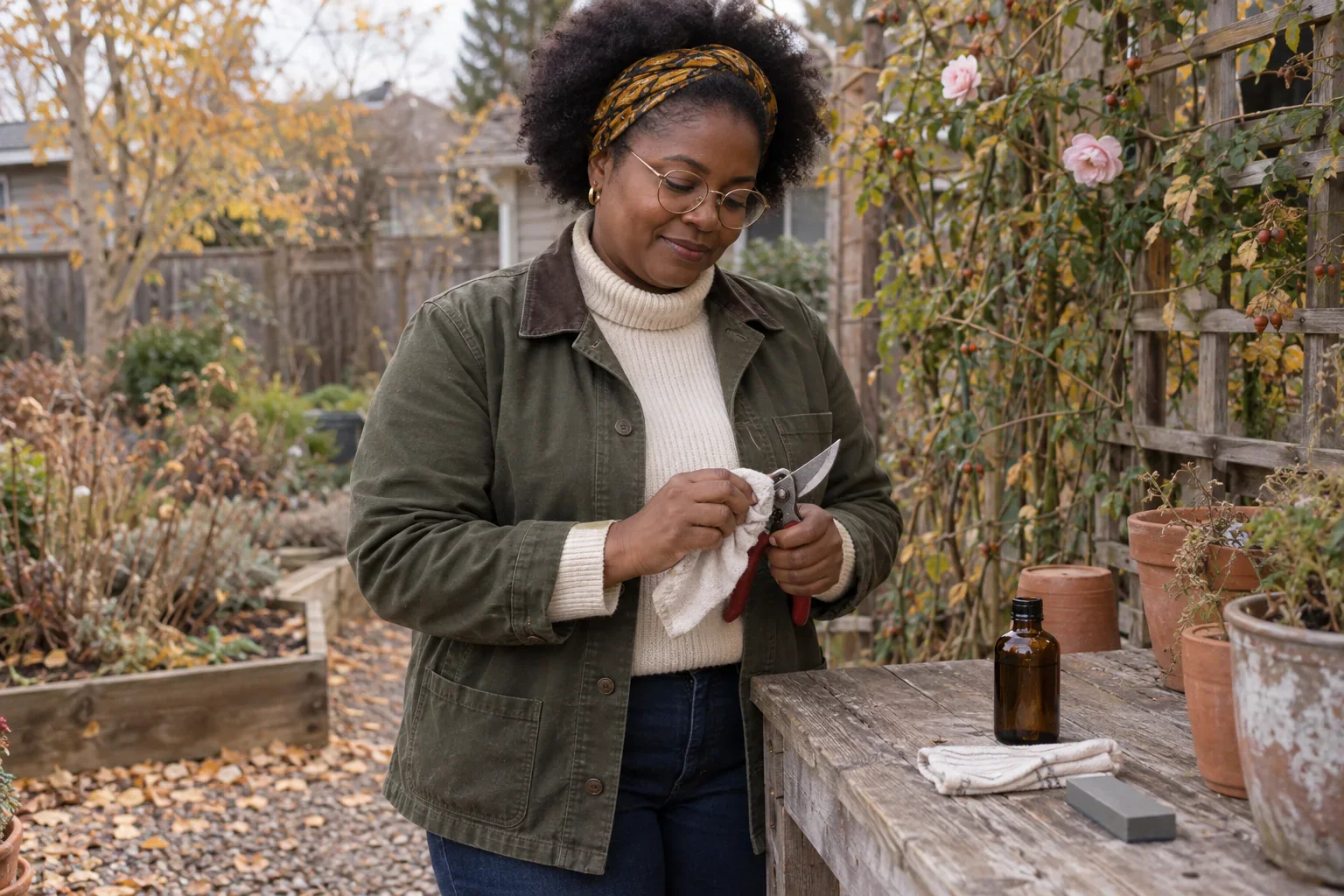
If you've wondered how to clean pruning shears or how to sharpen pruning shears without ruining them, here's the general routine. Always follow your brand's own care instructions, since designs differ.
After every use
Wipe sap, soil and plant debris off both blades with a damp cloth.
For sticky sap, use a little rubbing alcohol on a rag to loosen it.
Dry the tool completely, including around the pivot.
Put a drop of light oil on the pivot and wipe a thin film along the blade.
Close and lock the pruner before putting it away.
Between plants (to avoid spreading disease)
Many gardeners wipe blades with rubbing alcohol (isopropyl) or a household disinfectant between plants, especially after cutting diseased growth.
Bleach solutions also work but can corrode steel, so rinse and dry thoroughly if you use one.
Dry the blades before moving on, and oil them when you're done for the day.
Sharpening once or twice a season
Clean and dry the pruner first so you can see the edge clearly.
Using a fine diamond file or whetstone, sharpen only the beveled side of the cutting blade.
Follow the existing bevel angle, using a few smooth strokes from the heel of the blade to the tip.
Lightly remove any burr from the flat back side with one or two gentle, flat passes. Do not grind the flat side.
Leave the hook (or FELCO's "anvil blade") alone.
Wipe away metal filings, oil the blade and pivot, and test on a small stem.
If the blade is badly nicked or worn, check whether your brand sells a replacement blade or matching sharpener; FELCO, ARS and Corona all sell replacement parts.
Winter storage
Late fall and winter are a great time to clean, sharpen and oil tools before spring.
Store pruners dry, closed and locked, away from damp floors.
Give high-carbon blades a light coat of oil before storing.
Pruning Shears FAQ
What is the difference between bypass and anvil pruners?
Bypass pruners cut like scissors, with a sharp blade sliding past a hooked lower jaw, which makes a clean cut on live stems. Anvil pruners press a blade down onto a flat surface and are better for dead, dry wood, since they can crush living stems. When comparing bypass vs anvil pruners for roses, shrubs and perennials, bypass is the usual choice.
What are the best pruning shears for small hands?
Start by measuring your hand: under 6 7/8 inches from palm base to middle fingertip is "small" on FELCO's guide. None of our eight are rated small, but the FELCO 6 (rated medium) is the most compact pick here, and FELCO and others make dedicated small-hand models worth comparing. Look for shorter overall length and handles that don't open too wide. For the best pruning shears for small hands, fit beats brand every time.
What are the best pruning shears for roses?
Narrow, pointed bypass blades make it easier to reach into a rosebush and cut just above a bud. The ARS HP-VS8Z and FELCO 6 are both strong choices for that kind of detail work. If you have larger hands and older, thicker canes, the FELCO 2 adds more cut capacity.
How do you clean pruning shears?
Wipe off sap and dirt after each use, using rubbing alcohol for sticky residue. Between plants, especially after cutting diseased growth, many gardeners wipe blades with isopropyl alcohol or a household disinfectant. Dry completely, oil the pivot and blade, and store closed and locked.
How do you sharpen pruning shears?
Use a fine diamond file or whetstone on the beveled side of the cutting blade only, following the existing angle with a few strokes from heel to tip. Lightly remove any burr from the flat back, but don't grind the flat side or the hook. Follow your brand's instructions, and replace the blade if it's badly damaged.
Are Felco pruners worth the money?
Are Felco pruners worth the money? For many regular gardeners, yes, because FELCO sells replacement parts and lists a lifetime warranty on its own pages, so one pruner can be maintained for years. The catch is fit: choose the model rated for your hand size and handedness. If you only snip herbs or flowers occasionally, a budget-friendly pruner may be all you need.
What size branch can hand pruners cut?
It depends on the model; the picks here list maximum cuts from 5/8 inch to about 1 inch. Cutting right at that limit is hard on your hands and the blade, so stay a bit below it. For thicker branches, use loppers or a pruning saw.
Is it OK to prune in the fall?
Fall is a fine time to cut back many perennials and to clean, sharpen and oil your tools. Many deciduous shrubs and fruit trees are pruned during the dormant season in late winter, while spring-blooming shrubs like lilac, forsythia and many azaleas are usually pruned right after they bloom, so fall cuts can remove next spring's flowers. Check your plant's needs and your local extension service before you prune.
The Bottom Line
If you have larger hands and want one pruner to maintain for years, the FELCO 2 is our best overall pick, and left-handers should go straight to the FELCO 9. For medium hands, the FELCO 6, ARS HP-VS8Z and Okatsune 103 are all sized for you, with the ARS especially well-suited to roses. If your grip tires easily, the Fiskars PowerGear2 is designed to make each squeeze easier, per the brand; for thicker branches at a friendlier price, the Corona BP 3180D delivers a full inch of capacity; and the basic Fiskars Bypass is a budget-friendly pick for flowers and herbs.
Whichever you choose, take an afternoon this month to clean, sharpen and oil your tools before you put them away for winter; your spring self will thank you. And if there's a gardener on your gift list, a well-fitted pair of pruners is the kind of present that gets used, and appreciated, every single season.
By Kiyomi Dyme
Keep reading.
Best Grow Lights (2026): 8 Picks for Indoor Plants, Herbs and Dark Rooms
Leggy houseplants and short winter days? These 8 grow lights cover clip-on lamps, halo lights, floor stands, shelf bars and screw-in bulbs, plus how long to leave them on and which type you need.
Read Guide
Best Outdoor String Lights (2026): 8 Cozy Picks for Patios and Backyards
Dark by 5:30 and the patio sits unused? These 8 outdoor string lights cover Edison and globe bulbs, solar, remote-control color, smart app control and permanent roofline lights for the holidays.
Read Guide
Best Raised Garden Bed (2026): 8 Picks for Vegetables, Patios and Easier Backs
Heavy clay, sore knees or a patio with no ground to dig? These 8 raised garden beds cover deep metal kits, standing-height cedar, rolling elevated planters, tiered wood and portable grow bags for vegetables and easier backs.
Read Guide