Kitchen · Buying Guide
Best Vacuum Sealer (2026): 8 Picks to Stop Freezer Burn and Food Waste
The best vacuum sealer for your kitchen: 8 picks for meat, soups, meal prep, mason jars and small spaces, plus bag costs and food safety tips.

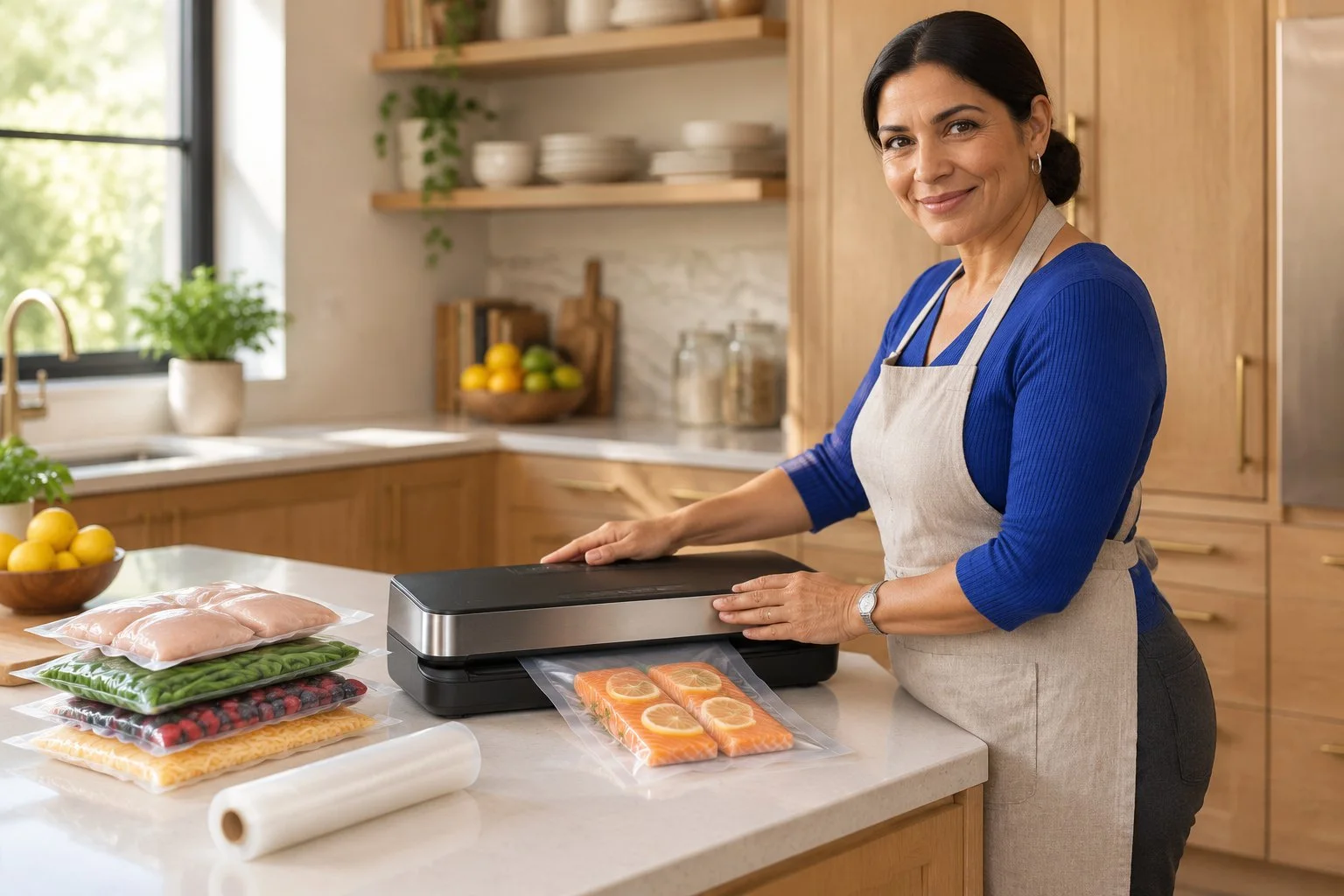
This guide is research-based; products were not tested hands-on.
If you have ever peeled open a package of chicken and found it covered in gray, icy patches, or found half a bag of spinach gone slimy in the crisper drawer, you already know how much money ends up in the trash. The best vacuum sealer can change that. It lets you break down bulk-club packs into sensible portions, freeze leftovers flat so they don't get lost in the back of the fridge, and make holiday soups, chili and casseroles weeks ahead. The picks below come from careful research into Amazon listing details and specs, recurring buyer-feedback themes and what established review outlets broadly agree on. ReviewDeal did not test these machines hands-on.
As an Amazon Associate, ReviewDeal earns from qualifying purchases.
This guide gives you a quick list of eight picks, a side-by-side comparison table and a closer look at each sealer, including who should skip it. After that comes a plain-English buying guide covering the four main types of sealers (countertop, chamber, handheld and mason-jar), how to seal meat and soups without making a mess, the real ongoing cost of bags and a few food safety basics. The FAQ at the end answers the questions people search most, including whether a vacuum sealer is worth it.

Quick Picks: The Best Vacuum Sealer for Every Kitchen
Best Overall: FoodSaver V4400 2-in-1 Vacuum Sealer. Automatic bag and moisture detection make it the most hands-off countertop choice, and it includes a built-in handheld sealer for zipper bags and containers.
Best Value and Best for Meat: NESCO Deluxe VS-12 Vacuum Sealer. A budget-friendly machine with a double heat seal for moist proteins and a gentle mode for soft foods.
Best for Beginners: FoodSaver FM2100 Vacuum Sealer. One-touch sealing, a built-in roll cutter and a solid starter kit make it an easy first sealer.
Best for Sous Vide and Small Kitchens: Anova Precision Vacuum Sealer. Slim and light enough for a drawer, with pulse and seal-only controls.
Best Space-Saver: FoodSaver PowerVac Compact VS0150. Stores upright, so it fits in tight cabinets or beside the toaster.
Best Handheld: Chef Preserve Compact Handheld Vacuum Sealer. A cordless, pepper-grinder-sized pump with 30 reusable bags for everyday leftovers.
Best Chamber Sealer: Avid Armor USV20 Chamber Vacuum Sealer. The splurge for sealing soups, marinades and juicy meats without liquid getting pulled into the machine.
Best Mason Jar Sealer: UNERVER M11 Electric Mason Jar Vacuum Sealer. A small cordless tool for keeping coffee, nuts, snacks and spices fresher in jars.
Vacuum Sealers Compared
Sealer | Type | Standout feature | Best for | Watch out for | Shop |
|---|---|---|---|---|---|
FoodSaver V4400 2-in-1 | Countertop (automatic) | Automatic bag and moisture detection, drip tray, built-in handheld sealer | Beginners and frequent sealers who want it to just work | Large and heavy (about 10 lb per the listing) | |
NESCO VS-12 | Countertop | Double heat seal plus gentle vacuum mode | Bulk meat, moist foods, value seekers | Manual lock handle; some find it slower | |
FoodSaver FM2100 | Countertop | One-touch sealing, roll cutter, accessory port | First-time buyers | You line up the bag yourself | |
Anova Precision (ANVS01-US00) | Countertop (slim) | About 2.3 lb with pulse and seal-only functions | Sous vide cooks, small kitchens | No roll storage or cutter; some durability complaints | |
FoodSaver PowerVac VS0150 | Countertop (vertical storage) | Stores upright; alignment tray | Tight cabinets and counters | No built-in cutter; learning curve on bag placement | |
Chef Preserve Handheld | Handheld | Cordless, about 5 seconds per bag, reusable bags | Everyday leftovers and produce | Not a heat seal; needs its own valve bags | |
Avid Armor USV20 | Chamber | Seals liquids; adjustable vacuum time; replaceable heat bar | Soups, marinades, batch cooks, heavy use | About 17.5 lb; the splurge | |
UNERVER M11 | Mason jar sealer | Cordless, fits wide- and regular-mouth jars | Dry pantry goods, coffee, snacks | Not canning; you supply the jars |
Our Top Vacuum Sealer Picks, Reviewed
A quick note before the details: star ratings and rating counts below are approximate and reflect Amazon at the time of writing. Amazon sometimes pools ratings across bundles and variations of the same listing, so treat them as a general signal rather than a precise score. Freshness claims such as "up to 5x longer" or "up to 3 years in the freezer" come from the brands themselves. Real-world results depend on the food, how it was handled before sealing and how cold your freezer stays.
1. FoodSaver V4400 2-in-1: Best Overall
If you want a sealer that takes the guesswork out of the process, this is the one to look at first. FoodSaver is the best-known home brand, and the V4400 is the kind of automatic model that review outlets keep pointing to as the easiest to live with. Per the listing, you slide the bag in and the machine detects it, pulls the air and seals, so there is no lid to latch or bag to line up just right. It also detects moisture and switches to the right mode, and a removable, dishwasher-safe drip tray catches any liquid that sneaks out of the bag.
The "2-in-1" part is a retractable handheld sealer built into the machine. You can use it with FoodSaver zipper bags, containers and the Quick Marinator, which is handy for half an onion, a block of cheese or tonight's marinade. Buyers often say they now understand why everyone loves this machine, that it keeps food fresher and saves money, and that it holds up for long-time owners. With about 4.6 stars from roughly 11,300 ratings and an Amazon's Choice badge, it has a long track record.
Best for: Anyone who seals often and wants the easiest, most automatic countertop experience, especially beginners who don't want to fiddle with bag placement.
Key features
Automatic bag detection and automatic moisture detection, per the listing
Removable, dishwasher-safe drip tray
Built-in roll storage and cutter for custom-size bags
Built-in retractable handheld sealer for zipper bags, containers and the Quick Marinator
Works with FoodSaver 8- and 11-inch rolls and pre-made bags; optional regular- and wide-mouth mason jar sealers and bottle stoppers
Starter kit: one 11-inch x 10-foot roll, 3 quart bags, 2 gallon bags, 3 quart zipper bags and 2 gallon zipper bags
FoodSaver claims freezer-stored meat can last up to 3 years and fridge-stored prepped food can stay fresh for weeks instead of days
Pros
Handles the bag for you, which buyers say makes it very beginner-friendly
Drip tray and moisture detection help with juicy meats
Handheld attachment adds flexibility for everyday leftovers
Strong long-term reputation among owners
Cons
Large and heavy: about 10 lb and about 11 x 20 x 12 inches per the listing
Needs a dedicated counter or cabinet spot; one buyer calls it handy for apartment kitchens, but it is still a full-size machine
FoodSaver-brand bags and rolls add ongoing cost, though generic compatible bags exist
The priciest FoodSaver on this list
Who should skip it: If your counter and cabinets are already full, or you only plan to seal a few things a month, a compact model or the NESCO will serve you just as well without taking over a shelf.
2. NESCO Deluxe VS-12: Best Value and Best for Meat
The NESCO VS-12 shows up again and again as a value recommendation, and its features explain why. It is budget-friendly, yet the listing describes a 130-watt double vacuum pump, dry, moist and double-seal modes, and a gentle vacuum option for soft foods such as bread and berries. The double heat seal lays down two seal lines for extra security, which is exactly what you want when you're portioning a big family pack of chicken thighs, ground beef or marinated pork.
It uses an easy-lock handle that you can close with one hand, and a viewing window lets you confirm the bag is in the right spot. Built-in roll storage and a sliding cutter mean you can make bags to fit whatever you're sealing. Buyer feedback leans heavily on value and durability: several owners describe years of steady use, with one saying it is still going strong after six years of constant use. Others call it a big food and time saver that has trimmed their grocery spending. NESCO claims food stays fresh up to 5x longer. It holds about 4.3 stars from roughly 15,100 ratings and ranked #8 in Vacuum Sealers at the time of writing.
Best for: Bulk-meat buyers and anyone sealing moist proteins, sauces or soft foods who wants strong features without paying for automation.
Key features
130-watt double vacuum pump, per the listing
Dry, moist and double-seal modes
Gentle vacuum option for soft or delicate foods
Easy-lock handle for one-handed operation and a viewing window
Built-in roll storage and sliding bag cutter
Two starter rolls included (about 8.6 in x 9.85 ft and 11.8 in x 9.85 ft)
About 15.75 x 8 x 4.5 inches and about 6 lb; 1-year limited warranty per the listing
Pros
Double heat seal is reassuring for meat and moist foods
Gentle mode helps protect bread, berries and other soft foods
Strong durability reports from long-time owners
Built-in roll storage and cutter on a budget-friendly machine
Cons
Some buyers find it slower than pricier machines; one thought it was slow at first, then came to love it
A few rate it "just okay"
Manual lock handle rather than automatic bag detection
The double seal takes a little longer
Who should skip it: If you want a machine that grabs the bag and does everything on its own, the FoodSaver V4400 is the more automatic option.
3. FoodSaver FM2100: Best for Beginners
Think of the FM2100 as a smaller, simpler take on FoodSaver's big machines, which is how several buyers describe it. It's a mid-range model with one-touch sealing, dual heat sealing strips, dry and moist settings and built-in roll storage with a cutter. You do have to line the bag up yourself, but the process is simple once you've done it a few times.
What makes it a smart first sealer is room to grow. Per the listing, an accessory port and hose connect to FoodSaver's handheld sealer, jar sealers and containers, so you can start with bags and add pantry storage later. It's also listed as suitable for sous vide prep. The starter kit is generous: an 11-inch x 10-foot roll, three 1-quart bags, two 1-gallon bags and the accessory hose. Buyers call it one of the easiest ways to save money, "a kitchen game-changer" and better than expected. It has about 4.5 stars from roughly 9,300 ratings and a listing badge showing 5K+ bought in the past month at the time of writing.
Best for: First-time buyers who want a reliable FoodSaver with a built-in cutter and the option to add jar and container accessories later.
Key features
One-touch sealing with dual heat sealing strips
Dry and moist food settings
Built-in roll storage and cutter
Accessory port and hose for FoodSaver handheld sealer, jar sealers and containers
Includes an 11-inch x 10-foot roll, three 1-quart and two 1-gallon pre-cut bags and an accessory hose
About 16.3 x 9.2 x 4 inches and about 6.6 lb; 5-year limited warranty per the listing
FoodSaver claims up to 3 years of freezer storage
Pros
Simple, one-touch operation
5-year limited warranty per the listing
Accessory port adds jar and container sealing
More compact than FoodSaver's full-size automatic models
Cons
No automatic bag detection; you position the bag yourself
One buyer stresses keeping the sealing area clean for good seals
FoodSaver-brand bags add ongoing cost
Who should skip it: If you mainly want a double seal for meat at a lower cost, the NESCO is the better match. If you never want to line up a bag, go for the V4400.
4. Anova Precision Vacuum Sealer: Best for Sous Vide and Small Kitchens
Anova designed this slim sealer as a companion to its sous vide cookers, though the listing says it works with any circulator. It's popular with sous vide fans and with anyone short on space. At about 16.73 x 4.8 x 3.14 inches and about 2.3 lb per the listing, it can slide into a drawer instead of claiming counter real estate.
The controls are more flexible than you might expect from such a small machine. You get one-button vacuum and seal, plus separate pulse and seal-only functions and wet and dry modes. Pulse lets you stop the vacuum before it crushes a delicate fillet or a soft dinner roll. It comes with 10 pre-cut BPA-free bags. Buyers praise its strong suction, reliable sealing and easy storage, and one notes that it handles several sealing sessions in a row without needing to cool down. It carries about 4.3 stars from roughly 6,300 ratings and an Amazon's Choice badge at the time of writing, along with a 2-year manufacturer warranty per the listing title.
Best for: Sous vide cooks, apartment and small-kitchen dwellers, and anyone who mostly seals smaller portions.
Key features
Slim, lightweight design (about 2.3 lb per the listing)
One-button vacuum and seal, plus pulse and seal-only functions
Wet and dry modes
Includes 10 pre-cut BPA-free bags
Works with Anova and other sous vide circulators
2-year manufacturer warranty per the listing title
Pros
Easy to store in a drawer
Pulse control protects soft and delicate foods
Buyers report strong suction and dependable seals
Simple to use
Cons
Some buyers say theirs didn't last long; one calls it "great while it lasted," another calls it disposable
No built-in roll storage or cutter, so you need scissors or pre-cut bags
The narrow build is best for smaller bags
Who should skip it: If you regularly break down large bulk packs or seal big cuts, a full-width machine with a roll cutter, such as the NESCO or FM2100, will be faster and more comfortable.
5. FoodSaver PowerVac Compact VS0150: Best Space-Saver
The VS0150 solves the most common objection to a countertop sealer: where to put it. It's built to store upright, so it can stand at the back of a cabinet or tuck in next to the coffee maker. Per the listing, it has dry and moist settings and a built-in alignment tray that helps guide the bag into the right position. FoodSaver also says it seals with 35% less bag waste than its previous models, which adds up over time.
It can connect to a FoodSaver handheld sealer and works with the brand's bags, rolls and accessories. The kit includes one 11-inch x 8-foot roll, 3 quart bags and 2 gallon bags. FoodSaver claims food stays fresh up to 5x longer in the freezer. Buyers commonly say it's easy to use, stops freezer burn and has saved them a lot of money, and some describe it as a big step up from older models, with several reporting years of use. It has about 4.2 stars from roughly 16,100 ratings at the time of writing; those ratings appear to be pooled with a sibling bundle listing.
Best for: Small kitchens and anyone who wants a full-width FoodSaver that doesn't hog a shelf.
Key features
Vertical storage design
Dry and moist settings
Built-in alignment tray for bag placement
FoodSaver says it uses 35% less bag material than previous models
Connects to a FoodSaver handheld sealer
Includes one 11-inch x 8-foot roll, 3 quart bags and 2 gallon bags
Pros
Upright storage frees up cabinet and counter space
Less bag waste helps with ongoing costs
Owners say it does a good job against freezer burn
Works within the FoodSaver accessory system
Cons
A few buyers say it sometimes didn't pull all the air out
One buyer notes it's easier "with a little background knowledge," so expect a short learning curve on bag placement
No built-in roll cutter
Who should skip it: If you cut lots of custom bags from rolls, the FM2100 or NESCO with a built-in cutter will feel more convenient.
6. Chef Preserve Compact Handheld: Best Handheld for Everyday Leftovers
If you're looking for the best handheld vacuum sealer for quick, everyday use, Chef Preserve is the standout on Amazon. It ranked #2 in Vacuum Sealers with an Amazon's Choice badge and about 4.6 stars from roughly 15,000 ratings at the time of writing. The cordless, rechargeable pump is about the size of a pepper grinder. Per the listing, you press one button and it seals a bag in about 5 seconds, then shuts off on its own. The brand claims one charge handles about 1,000 bags.
It comes with 30 reusable, resealable BPA-free bags (15 small, 15 medium) that the listing describes as dishwasher-, freezer-, fridge- and microwave-safe, plus a charging cable and a zipper clip. This is the sealer you'll reach for with half an avocado, cut herbs, cheese, cooked chicken for lunches or the extra spinach you don't want going slimy. Buyers call it "a must have," say it works as described and expect to use it for years. The listing also mentions a 60-day money-back guarantee and a 2-year warranty.
Best for: Small kitchens, quick fridge leftovers, produce and short-term freezer storage, or anyone who wants a low-commitment way to try vacuum sealing.
Key features
Cordless, rechargeable, about pepper-grinder size
One-button operation; seals in about 5 seconds and shuts off automatically
About 1,000 bags per charge (brand claim)
30 reusable BPA-free bags (15 small, 15 medium)
Bags listed as dishwasher-, freezer-, fridge- and microwave-safe
60-day money-back guarantee and 2-year warranty per the listing
Pros
Takes up almost no space
Reusable bags cut down on single-use plastic
Very fast for small, daily jobs
Budget-friendly and easy to start with
Cons
Works only with its own valve bags, not regular rolls
Zip bags are not a heat seal; for long-term deep-freeze storage of meat, a heat-seal machine is the safer bet
Smaller bag sizes rule out big cuts and whole roasts
Sold by one seller
Who should skip it: If your main goal is stocking the freezer with bulk meat for months, start with a countertop heat sealer. A handheld is a great add-on, not a replacement.
7. Avid Armor USV20: Best Chamber Sealer for Soups, Liquids and Heavy Use
If liquids are your biggest headache, a chamber sealer is the answer, and the Avid Armor USV20 is often named the best chamber vacuum sealer for home kitchens. Instead of sucking air out of the bag's open end, a chamber sealer places the whole bag inside a sealed chamber and equalizes the pressure. Per the listing, that means you can seal soups, stews, marinades and juicy meats without liquid being pulled toward the machine. You can vacuum-seal a big batch of holiday turkey stock without pre-freezing it first.
The listing describes adjustable vacuum time (15 to 60 seconds) and seal controls, a 4-liter stainless chamber (about 12.25 x 8.5 x 3 inches inside) and an 11.5-inch heating bar that you can replace yourself. It uses smooth chamber pouches up to about 11 x 10 inches, which the brand says reduces long-term bag costs compared with the textured bags countertop machines need. Avid Armor describes itself as an American company with customer care in Kansas. Buyers call it worth the investment and great for home use; one says they use it so often they bought a second freezer. It has about 4.7 stars from roughly 1,200 ratings at the time of writing.
Best for: Batch cooks, soup and chili lovers, bulk buyers, hunters, anglers and sous vide fans who seal often and want liquids handled cleanly.
Key features
Chamber design seals liquids and moist foods, per the listing
Adjustable vacuum time (15 to 60 seconds) and seal controls
4-liter stainless chamber, about 12.25 x 8.5 x 3 inches inside
User-replaceable 11.5-inch heating bar
Uses smooth chamber pouches up to about 11 x 10 inches
Outer body about 14 x 12 x 8.25 inches and about 17.5 lb per the listing
Pros
The easiest way to seal soups, stocks and marinades
Smooth pouches tend to cost less over time, according to the brand
Replaceable heating bar supports long-term use
Highest star average on this list at the time of writing
Cons
Heavy and needs real counter or cabinet space
The splurge of the list, best justified by frequent use
Bag size is limited by the chamber, so big roasts may not fit
Who should skip it: Occasional sealers, small kitchens and anyone who mostly freezes dry cuts of meat. A countertop model with a moist mode and a little pre-freezing handles most home needs.
8. UNERVER M11: Best Mason Jar Sealer for Pantry Storage
For coffee beans, nuts, crackers, spices and holiday baking supplies, a jar sealer is a tidy, reusable alternative to bags. The UNERVER M11 is a strong candidate for the best mason jar vacuum sealer if you want something small and cordless. Per the listing, it removes air from mason jars with one touch and fits both wide- and regular-mouth jars with the included adapters. The kit comes with a standard-mouth converter, 5 wide-mouth lids, 5 regular-mouth lids, 12 labels and a pen.
At about 4 x 4 x 3.7 inches, it fits in a drawer. Buyers describe it as compact and easy to use and a game-changer for pantry storage and cutting food waste. One buyer notes it works with ordinary store-bought lids, so no specialty seals are required. It holds about 4.4 stars from roughly 9,200 ratings at the time of writing, with a 12-month warranty per the listing.
Best for: Pantry organizers, coffee lovers, bulk dry-goods buyers and anyone who preps snacks or meal components in jars.
Key features
Cordless electric sealer with one-touch operation
Fits wide- and regular-mouth mason jars
Includes a standard-mouth converter, 10 lids, 12 labels and a pen
Designed for dry goods, coffee, nuts, snacks, spices, leftovers and meal prep
About 4 x 4 x 3.7 inches; 12-month warranty per the listing
Pros
Tiny and easy to store
Reusable jars mean no ongoing bag cost
Works with regular lids, per one buyer
Budget-friendly
Cons
One buyer's unit stopped working after about 30 jars
Jar sealing is not canning and does not make perishable food shelf-stable
You supply the jars
Who should skip it: If freezer meat is your main concern, a jar sealer won't help much. Pair it with a countertop sealer, or choose a FoodSaver with an accessory port and add the brand's jar attachment instead.
How to Choose a Vacuum Sealer
The right machine depends less on which one is "best" in the abstract and more on what you'll actually seal, how often and where it will live. Here's how to narrow it down.
Countertop, chamber, handheld or jar sealer?
Countertop (edge or "external") sealers such as the FoodSaver, NESCO and Anova models are the most common home choice. You put the open end of a bag into the machine, it pulls the air out and a heat strip melts the bag shut. They need textured or embossed vacuum bags or rolls, because those channels let air escape. For most people looking for the best vacuum sealer for food storage in a typical kitchen, this is where to start.
Chamber sealers such as the Avid Armor USV20 place the entire bag inside a chamber. Because pressure equalizes inside and outside the bag, liquids stay put. They handle soups and marinades best and use cheaper smooth pouches, but they are big, heavy and a splurge.
Handheld sealers such as Chef Preserve use zip bags with a small valve. They're great for quick leftovers, produce and small kitchens, but they don't create a heat seal, so they aren't ideal for long-term freezer storage of meat.
Mason-jar sealers such as the UNERVER M11 pull air from jars and are best for dry pantry goods. Some countertop machines, including the FoodSaver FM2100 and V4400, can do jars with an accessory hose and jar attachment.
How often will you use it?
Be honest about this one, because it's the biggest factor in whether a machine earns its spot. If you seal occasionally (a few portions of chicken here, some berries there), a budget-friendly or compact model is plenty. If you break down bulk-club meat every week, freeze a garden harvest, hunt or fish, or batch-cook for the month, features like automatic bag handling, a double seal and a built-in cutter save real time. Very heavy users, especially those sealing lots of liquids, are the ones who get full value from a chamber sealer.
Sealing meat, soups and other moist foods
Liquid getting sucked toward the machine is one of the most common worries, and it's mostly preventable with a few habits:
Pre-freeze first. Spread soups, sauces, marinated meats or juicy berries on a tray (or freeze liquids in the bag laid flat) for 1 to 2 hours until firm, then seal. Flat portions also stack neatly. This works beautifully for a big pot of chili from your slow cooker or holiday turkey soup.
Use moist mode or a double seal. These settings adjust the process for damp foods and add security.
Leave headspace. Leave a few inches of empty bag above the food so the machine has room to work.
Wipe the bag mouth. Any grease or moisture where the seal forms can weaken it.
Consider a chamber sealer if you seal liquids constantly; it's the easiest route.
For the best vacuum sealer for meat in particular, a double heat seal (like the NESCO) or automatic moisture detection with a drip tray (like the FoodSaver V4400) are worth looking for.
Soft and delicate foods such as bread, cookies, chips and ripe berries can get crushed under full suction. Use a gentle or pulse function to stop the vacuum early, or pre-freeze them until firm. The same goes for cooked grains: portion rice from your rice cooker into flat bags, freeze until firm and then seal for easy single servings.
Bags, rolls and the real ongoing cost
The machine is a one-time purchase; vacuum sealer bags are forever. Factor them in before you choose.
Countertop sealers need embossed or channeled bags. Rolls let you cut custom sizes, which wastes less material than always reaching for a gallon bag. A built-in cutter makes rolls much more convenient.
Brand vs generic: FoodSaver sells its own bags and rolls, and generic compatible options exist. Check the listing to confirm compatibility with your machine's width and seal type.
Handheld sealers need their own valve bags. Chef Preserve's are reusable, which offsets some of the cost.
Chamber sealers use smooth pouches, which Avid Armor says lowers long-term bag costs.
Jar sealers use jars and lids you can reuse again and again.
A simple rule: if you'll seal a lot, the cost per bag matters more than the price of the machine.

Size, storage and features worth paying for
Measure your counter or cabinet before you buy. Full-size automatic machines and chamber sealers are heavy enough that you won't want to lift them in and out often; the V4400 is about 10 lb and the USV20 about 17.5 lb per their listings. Slim and vertical-storage designs like the Anova and FoodSaver VS0150 suit small kitchens, and handheld and jar sealers fit in a drawer.
Features that genuinely make life easier:
Automatic bag detection, so you don't have to line up the bag
Moisture detection or a moist mode for meats and marinades
A removable drip tray for easy cleanup
Built-in roll storage and cutter
An accessory port for jars and containers
Pulse or manual control for delicate foods
A double seal for extra security with moist foods
A replaceable seal bar or gaskets for a longer life
Care is simple but matters: wipe the seal strip and gaskets after use, empty the drip tray, let the machine cool between long runs of seals if the listing advises it, and check your manual about storing it with the lid unlatched to protect the gaskets.
Food safety basics
Vacuum sealing slows spoilage and freezer burn, but it doesn't replace refrigeration or freezing. It is also not canning, so it does not make perishable foods shelf-stable. Keep sealed perishables in the fridge or freezer, and thaw frozen items in the refrigerator, following general USDA-style guidance. Some foods need extra care, including soft cheeses, raw mushrooms, garlic and cruciferous vegetables. Blanch vegetables such as broccoli, green beans and cauliflower before freezing to help preserve quality. Label each bag with the contents and the date so nothing becomes a mystery package.
Vacuum Sealer FAQ
Is a vacuum sealer worth it?
For many kitchens, yes. A vacuum sealer pays off if you buy in bulk, cook in batches, freeze garden produce, cook sous vide, hunt or fish, or keep throwing out freezer-burned food. It may not be worth it if you rarely freeze anything and have very little storage space. If you're unsure, a handheld or jar sealer is a low-commitment way to find out whether the habit sticks.
What is the best vacuum sealer for home use?
For most people, the FoodSaver V4400 is the easiest all-around choice thanks to automatic bag and moisture detection. If you want strong features for less, the NESCO VS-12 is the value pick, and the FoodSaver FM2100 is a simple, beginner-friendly middle ground. Small kitchens should look at the Anova or FoodSaver VS0150.
What is the best vacuum sealer for meat?
The NESCO VS-12 is a standout for meat because of its double heat seal and moist mode, and the FoodSaver V4400 adds moisture detection and a drip tray. If you seal large amounts of marinated or very juicy meat often, the Avid Armor USV20 chamber sealer handles liquids most easily.
Do vacuum sealers really prevent freezer burn?
They greatly reduce it. Freezer burn happens when air reaches the surface of frozen food and dries it out. Removing most of the air and sealing tightly keeps that contact to a minimum, so frozen food generally keeps its quality longer. A good seal, a cold freezer and not letting food thaw and refreeze all help.
Do vacuum sealers need special bags?
Yes, in most cases. Countertop sealers need embossed or textured bags or rolls so air can escape before sealing. Handheld sealers need their own valve bags. Chamber sealers use smooth pouches. Jar sealers use mason jars with compatible lids. Always check the listing for compatibility before buying generic bags.
Chamber vacuum sealer vs regular vacuum sealer: what's the difference?
A regular (countertop) sealer pulls air out of the open end of the bag, so liquids can get drawn toward the machine. A chamber sealer places the whole bag in a sealed chamber and equalizes pressure, which lets it seal soups, stocks and marinades cleanly. Chamber models use cheaper smooth pouches but are much larger, heavier and more expensive.
Can you vacuum seal liquids like soup?
Yes. With a chamber sealer, you can seal liquids directly. With a countertop sealer, freeze the soup flat in the bag or in a container for 1 to 2 hours until firm, then seal using moist mode or a double seal, leaving a few inches of headspace. Once frozen in flat portions, a single serving reheats quickly in a pot or, for casseroles and crispy leftovers, in a toaster oven without heating the big oven.
How long does vacuum-sealed meat last in the freezer?
Vacuum-sealed meat generally holds its quality much longer than meat in regular freezer bags. Brands make bold claims here; FoodSaver, for example, says freezer-stored meat can last up to 3 years. Real results vary with the cut, how fresh it was when sealed and how cold your freezer stays. For the best quality, follow general freezer guidance, keep your freezer cold and label every bag with the date.
Are handheld vacuum sealers any good?
They're very good at what they're designed for: fast, everyday sealing of leftovers, produce, cheese and short-term freezer items in reusable valve bags. They don't create a heat seal, though, so for long-term deep-freeze storage of meat, a countertop heat sealer is the safer choice. Many people find a handheld makes a great companion to a countertop machine.
Vacuum sealer vs Ziploc freezer bags: which is better?
For long-term freezer storage, a heat-sealed vacuum bag is better because it removes far more air and seals tighter, which helps prevent freezer burn. Zip-top freezer bags are fine for short-term storage and items you'll use soon. If you freeze a lot of meat or batch-cooked meals, a vacuum sealer usually reduces waste enough to make a real difference.
How We Chose These Vacuum Sealers
ReviewDeal did not test these sealers hands-on. Instead, the picks come from structured research, with each product judged on the same criteria:
Listing specs and features: modes, seal type, controls, included bags and accessories, as stated on each Amazon listing. Listings were checked in late October 2026, and all products were in stock at the time.
Sealer type: a deliberate mix of countertop, chamber, handheld and mason-jar sealers so there's a fit for different needs.
Moist-food handling: moist modes, double seals, drip trays and chamber designs.
Bag compatibility and ongoing cost: whether a machine uses rolls, pre-cut bags, valve bags, smooth pouches or jars, and how that affects long-term spending.
Size and storage: listed dimensions and weights, plus space-saving designs.
Buyer-feedback patterns: recurring themes in public Amazon reviews, including complaints about durability, suction and learning curves, not just praise.
Expert consensus: what established review outlets broadly agree on about brands and sealer types.
A spread of budgets and kitchens: from budget-friendly handheld and jar sealers to mid-range countertop models and a chamber splurge.
Amazon availability: every pick was in stock when checked.
Ratings, rankings and availability can change, so check the current listing before you buy.
The Bottom Line
If you only buy one, make it the FoodSaver V4400 2-in-1. Its automatic bag and moisture detection take the fuss out of sealing, the drip tray helps with juicy meats, and the built-in handheld sealer covers everyday leftovers too. Just make sure you have a spot for it. If space or budget is tight, the NESCO VS-12 delivers a double heat seal and gentle mode at a budget-friendly price, and the FoodSaver FM2100 is an easy, well-equipped first sealer.
Go handheld with the Chef Preserve if you mainly want to keep leftovers, produce and cheese fresher in the fridge and your kitchen is short on space. Choose the UNERVER M11 jar sealer if your pantry is your problem area: coffee, nuts, snacks and baking supplies. And if you batch-cook soups and chili, buy meat in bulk or seal often enough that liquids drive you up the wall, the Avid Armor USV20 chamber sealer is the splurge that earns its keep.
Whichever you choose, the habits matter as much as the machine: pre-freeze moist foods, wipe the bag mouth, label everything and keep perishables cold. That's how you stop throwing money away, one freezer bag at a time.
By Kiyomi Dyme
Keep reading.
Best Food Processor (2026): 8 Picks for Holiday Prep, Chopping and Pie Crust
Chopping onions for stuffing, shredding cheese for casseroles, pulsing pie crust: these 8 food processors cover big-batch 14-cup models, mid-size picks for small kitchens, a blender combo and easy mini choppers.
Read Guide
Best Air Fryer (2026): 8 Picks for Crispy Weeknight Dinners and Holiday Sides
Want crispy dinners without heating the whole kitchen? These 8 air fryers cover families, holiday sides, small kitchens, glass cooking, easy cleanup and cooking for one or two.
Read Guide
Best Hand Mixer (2026): 8 Picks for Holiday Baking, Cookie Dough and Whipped Cream
The best hand mixer for holiday baking: 8 corded and cordless picks for cookie dough, whipped cream and mashed potatoes, from budget to splurge.
Read Guide